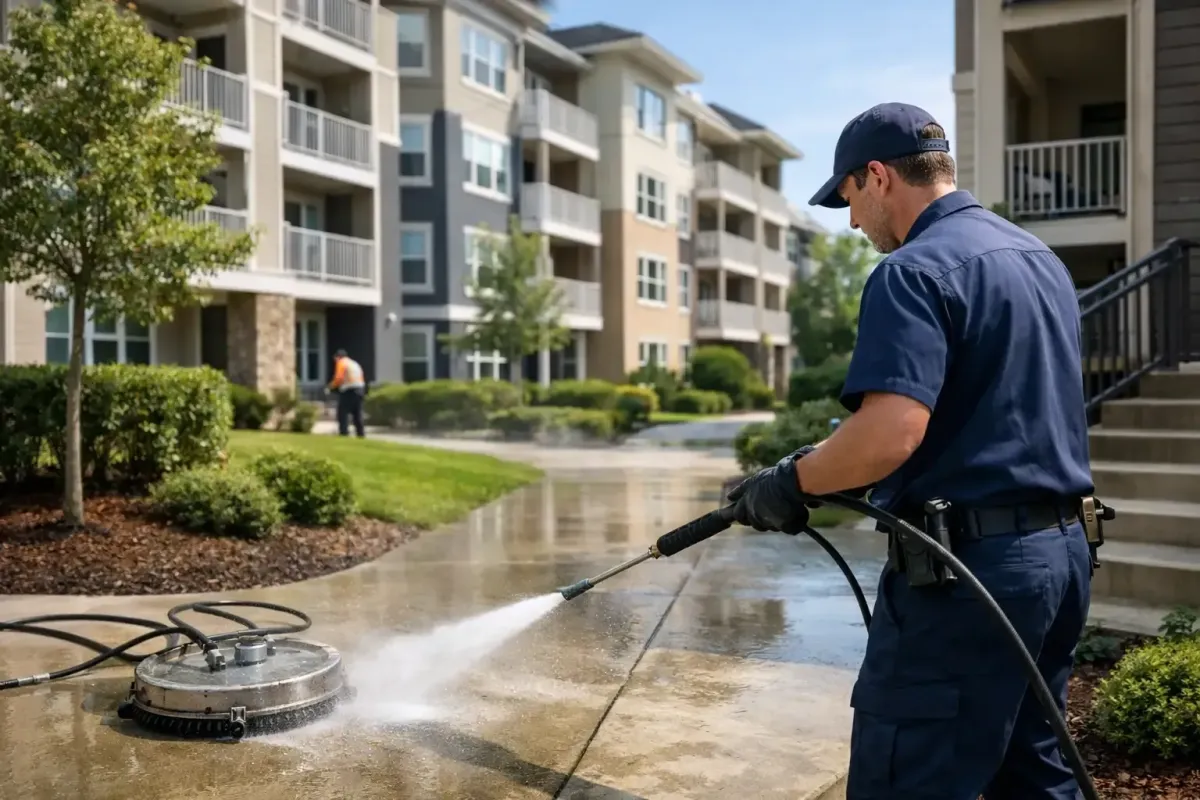
Apartment Complex Pressure Washing Done Right
A stained walkway outside the leasing office does more damage than most property owners realize. Tenants notice it, prospects notice it, and so do vendors, inspectors, and ownership groups reviewing the condition of the asset. Apartment complex pressure washing is one of the fastest ways to improve how a property looks, feels, and performs without taking on a major renovation.
For multifamily properties across Greater Los Angeles, exterior cleaning is not just about appearance. It helps reduce slip hazards, cuts down on organic buildup, and protects surfaces that are expensive to repair or replace. When the work is done with the right equipment and the right cleaning method, the difference is immediate and the long-term value is real.
Why apartment complex pressure washing matters
An apartment community has more foot traffic, more vehicle traffic, and more exposure than a single home. Sidewalks collect dirt, gum, food spills, oil, and grease. Stucco walls pick up pollution, cobwebs, and runoff stains. Dumpster pad areas, breezeways, pool decks, and parking garages all have their own cleaning challenges.
That buildup does not stay cosmetic for long. Mold, mildew, and algae can make surfaces slick. Dark staining can make a property look older than it is. In a competitive rental market, appearance plays a direct role in first impressions and perceived value. Prospective tenants may never say, "the concrete was dirty," but they absolutely register whether a property feels clean and well maintained.
For property managers, that matters because curb appeal supports occupancy, resident satisfaction, and owner confidence. A clean exterior sends a simple message - this property is cared for.
What gets cleaned at a multifamily property
Apartment complex pressure washing usually covers much more than the front entry. The scope depends on the age of the property, the surface materials, and how the site is used day to day.
Common service areas include sidewalks, entryways, breezeways, stairwells, curbs, parking areas, dumpster pads, retaining walls, patios, and common concrete. In many cases, exterior walls, building facades, fencing, and other shared surfaces also need attention. Some properties benefit from soft washing on painted or delicate areas, while harder surfaces like concrete can handle more direct pressure.
This is where experience matters. Not every surface should be cleaned the same way. Too much pressure can scar wood, etch concrete, damage paint, or force water where it should not go. A dependable contractor knows when to use pressure washing, when to use soft washing, and how to adjust the process to the material in front of them.
Pressure washing vs. soft washing
Property owners and managers often use these terms interchangeably, but they are not the same. Pressure washing relies on higher water pressure to remove buildup from durable surfaces like concrete and some masonry. Soft washing uses lower pressure along with cleaning solutions designed to break down organic growth, dirt, and staining on more delicate materials.
For apartment buildings, the best results often come from a combination of both. Concrete walkways may need surface cleaning and targeted stain treatment, while stucco walls or painted trim may need a lower-pressure approach. Roofline areas, siding, and fencing may also require a gentler method.
The trade-off is simple. If a company uses high pressure everywhere, the risk of damage goes up. If they use only a light rinse on every area, the results may not last. Good apartment complex pressure washing is surface-specific, efficient, and safe.
The biggest benefits for owners and managers
The visual improvement is obvious, but the practical benefits are what make routine service worth scheduling.
Cleaner common areas help reduce slip risks caused by algae, mildew, and grime. That is especially important in shaded breezeways, around pool areas, and near irrigation overspray. Pressure washing also helps control odor and mess in high-use zones like dumpster enclosures and loading areas.
There is also the brand side of property management. When residents see regular upkeep, they tend to feel better about where they live. When prospective tenants tour a clean property, leasing staff start from a stronger position. When owners review the property, a clean exterior reinforces that maintenance is being handled professionally.
Routine cleaning can also help extend the life of surfaces by removing contaminants before they settle in too deeply. It will not replace repairs, but it can delay premature wear and help properties avoid the neglected look that often leads to more expensive catch-up work later.
How often should an apartment complex be pressure washed?
It depends on the property. A small complex with limited traffic may only need major exterior cleaning once or twice a year, while a busy multifamily community near major roads, heavy tree cover, restaurants, or parking-intensive areas may benefit from more frequent service.
In Southern California, factors like dust, air pollution, irrigation runoff, bird activity, and warm weather all affect how quickly surfaces get dirty. A property with lots of shaded areas may see algae and mildew show up faster. A property with constant turnover or active leasing may prioritize curb appeal year-round.
For many apartment communities, the best plan is not waiting until everything looks bad. A scheduled maintenance approach keeps the property consistently clean and usually makes each visit more efficient. Spot treatment between larger service dates can also make sense for dumpster pads, breezeways, and entrance areas.
What a professional service should include
A professional crew should do more than show up with a machine and spray everything down. Multifamily work requires planning, communication, and attention to tenant impact.
That starts with a clear scope of work. Property managers should know which areas are being cleaned, what method will be used, and whether special treatment is needed for oil stains, gum, mildew, or rust. Timing matters too. Work should be scheduled to minimize disruption to residents, foot traffic, and parked vehicles.
A licensed and insured contractor adds another level of confidence, especially on larger sites where liability and access issues matter. Communication should be simple and direct from quote to scheduling to final walkthrough. When a company is organized, the whole job feels easier.
That is a big reason many local managers look for a provider that can handle both appearance and maintenance goals. A trusted team should be able to improve the look of the property while protecting surfaces and respecting the day-to-day flow of the community.
Signs your property is overdue
Some signs are obvious, like blackened sidewalks or stained entry concrete. Others are easier to overlook because they build up gradually.
If walkways feel slick, if walls have green or dark streaking, if dumpster areas hold odor and residue, or if the front of the property looks dull even after landscaping is touched up, cleaning is probably overdue. The same goes for properties preparing for inspections, unit turns, leasing pushes, ownership visits, or photo updates.
A clean exterior does not solve every property issue, but it improves the entire presentation fast. It can make landscaping look sharper, paint look newer, and common areas feel more inviting almost immediately.
Choosing the right company for apartment complex pressure washing
Price matters, but it should not be the only filter. Apartment properties have too many variables for bargain work to be worth the risk. An inexperienced crew may leave striping on concrete, miss heavily used areas, damage surfaces, or create avoidable tenant complaints.
Look for a company that understands commercial and multifamily environments, explains the cleaning method clearly, and provides fast, no-hassle quoting. Reliability counts. So does showing up on time, communicating well, and standing behind the work.
For managers in Greater Los Angeles, local experience helps. Properties in Pasadena, Glendale, Burbank, Arcadia, San Marino, and nearby communities face different conditions than properties in other regions. Dust, traffic film, sun exposure, and irrigation patterns all shape how surfaces respond to cleaning and how often they need service.
Whales Pressure Washing approaches these jobs with the same priorities property managers care about most - premium results, safe surface-specific cleaning, clear communication, and dependable service from start to finish.
Clean properties lease better and feel better
Residents may not think much about pressure washing when everything looks good. They notice when it does not. That is why exterior cleaning works best as part of a larger property care strategy, not as a last-minute fix after complaints start rolling in.
A well-maintained apartment community feels safer, more professional, and easier to take pride in. If your sidewalks, breezeways, walls, or common areas are telling a different story than the one you want tenants to see, a professional cleaning can change that faster than you might expect.
