Best Way to Clean a Concrete Driveway
That dark, blotchy driveway out front does more than hurt curb appeal. It makes the whole property look older, dirtier, and harder to maintain than it really is. The best way to clean a concrete driveway depends on what is staining it, how old the concrete is, and whether you want a quick improvement or a deep, even restoration that lasts.
For most homes, the right answer is not just blasting the surface with the strongest pressure washer you can find. Concrete is tough, but it is also porous. Use too much pressure, the wrong cleaner, or the wrong technique, and you can leave behind lines, etching, or a patchy finish that looks worse than the original grime. The goal is simple - remove buildup, treat stains properly, and clean the slab evenly without damaging the surface.
What is the best way to clean a concrete driveway?
In most cases, the best results come from a three-part process: pretreat the surface with the right cleaner, use controlled pressure washing with the correct nozzle or surface cleaner, and rinse thoroughly so residue does not dry back into the pores. That approach works better than pressure alone because driveway stains are usually a mix of dirt, tire marks, oil drips, algae, mildew, and mineral buildup.
A basic rinse might improve the color for a day or two, but it will not always remove embedded staining. On the other hand, aggressive pressure without pretreatment often creates zebra-striping across the concrete.Professional driveway cleaningfocuses on even coverage and stain-specific treatment, which is why the finished surface looks brighter and more uniform instead of just wetter.
Why concrete driveways get so dirty so fast
Concrete holds onto contamination. That is the main issue. Because the surface is porous, it absorbs moisture, oils, and fine debris rather than letting them sit neatly on top.
In the Greater Los Angeles area, driveways also deal with dust, vehicle traffic, irrigation overspray, tree debris, and warm conditions that can encourage algae or mildew in shaded sections. Add in rust from metal furniture, battery drips, fertilizer runoff, or old automotive leaks, and one driveway can have several different stain types at once.
That is why there is no single miracle cleaner for every job. The method has to match the problem.
Best way to clean a concrete driveway without causing damage
The safest method starts with inspection. Before any cleaning begins, look for cracking, spalling, loose top layers, old repairs, and areas that may already be weakened. High pressure on damaged concrete can break loose more material and widen surface flaws.
Next comes pretreatment. A driveway cleaning detergent helps loosen organic growth, soil, and traffic film so the pressure washer can rinse them away more effectively. If there are oil spots, those usually need a degreaser or stain-targeted treatment first. Rust, fertilizer, and efflorescence may require different products entirely.
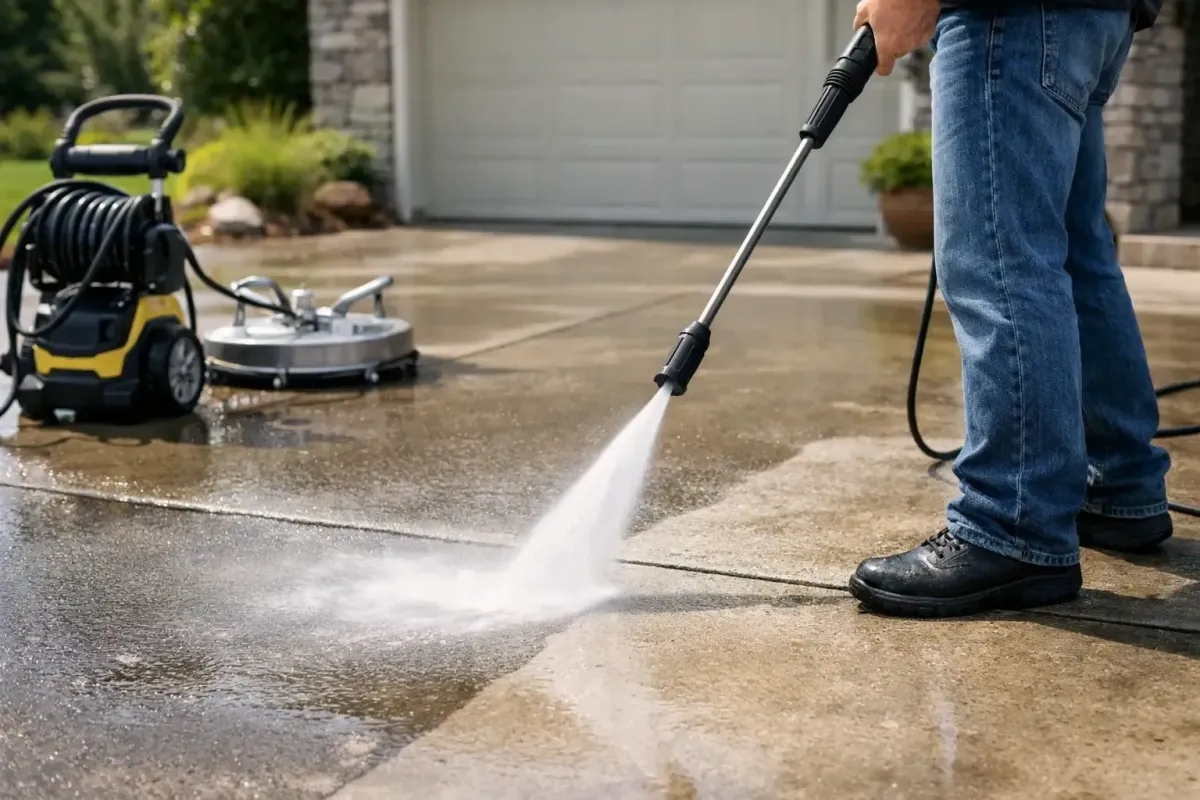
After that, use moderate pressure and keep the cleaning pattern consistent. A surface cleaner usually gives the most even finish on largeconcrete areasbecause it reduces streaking and hot spots. For edges and tight areas, a wand can help, but technique matters. Holding the tip too close or staying in one place too long can etch the surface.
A final rinse matters more than many people realize. If detergent, loosened grime, or dirty runoff is left to dry, the driveway can end up looking dull or uneven.
Pressure washing vs. chemical treatment
This is where a lot of homeowners get mixed up. They assume pressure is the cleaning power. In reality, pressure is only part of the job.
For light dust, surface dirt, and mild organic growth, pressure washing can do a lot. But when stains have soaked into the concrete, chemicals often do the heavy lifting. Oil, rust, algae, mildew, and deep discoloration usually need treatment before or during washing.
That does not mean stronger chemicals are always better. The wrong product can discolor nearby surfaces, harm landscaping, or fail completely because it is not designed for the stain. It is also common to see homeowners use bleach too heavily, which may lighten some organic staining but does not solve every issue and can create runoff concerns if handled carelessly.
The right balance is what gets premium results. Treat the stain correctly, then rinse and clean the slab evenly.
Common driveway stains and how they should be handled
Oil and grease are usually the toughest. Fresh spills have a better chance of coming out than old ones that have baked into the slab. Degreasers can help lift them, but some deep petroleum stains may lighten rather than disappear completely.
Tire marks often respond well to concrete-safe cleaning agents and controlled pressure washing. These marks usually sit closer to the surface than oil, so they can improve significantly with the right process.
Algae, mildew, and dark organic staining need cleaning solutions designed to kill and remove growth, not just push it around. If you only rinse the surface, the staining often returns quickly.
Rust is its own category. Rust stains usually need a specialty rust remover, and not every product that works on one surface should be used on concrete. Acid-based treatments can be effective, but they need to be handled carefully to avoid surface damage or surrounding discoloration.
DIY driveway cleaning: when it works and when it does not
If your driveway has light dirt, no major staining, and the concrete is in solid condition, a DIY cleaning may be enough to freshen it up. Sweeping first, pretreating problem areas, and using a properly sized pressure washer with a wide-angle tip can make a visible difference.
The trouble starts when the driveway is heavily stained or the operator is inexperienced. Too much pressure can leave permanent wand marks. Too little pressure can waste hours without really cleaning the surface. And using household cleaners that are not made for concrete can produce poor results or create runoff issues.
For larger homes, steep driveways, commercial properties, or concrete with multiple stain types, professional service is usually the faster and safer option. It is not just about saving time. It is about getting a cleaner, more consistent result without the risk of damage.
When professional driveway cleaning is the better choice
If the driveway has years of buildup, visible oil staining, algae in shaded areas, or uneven color after past cleaning attempts, professional washing is the smarter move. The same goes for newer decorative concrete, older slabs with wear, or properties where appearance matters right away.
A trained crew knows how to adjust pressure, choose surface-safe products, and clean evenly across the entire area. That matters for homeowners who care about curb appeal and for property managers who need the entrance to look clean, maintained, and tenant-ready.
This is especially true when you want premium visual results without trial and error. A trusted company can inspect the surface, explain what is realistic, and handle the work safely. For homeowners and businesses in the Greater Los Angeles area, Whales Pressure Washing takes that approach seriously - clear communication, surface-specific cleaning, and results backed by professional care.
How often should you clean a concrete driveway?
Most driveways benefit from a full cleaning about once a year, but that is not a hard rule. It depends on traffic, shade, nearby trees, irrigation, drainage, and whether vehicles regularly leak fluids.
A clean driveway lasts longer visually when spills are handled early. If oil, fertilizer, or rust is left in place for months, the stain can set deeper and become harder to remove. Regular maintenance keeps the concrete looking better and usually makes future cleanings easier.
Forcommercial propertiesor high-visibility homes, more frequent service may make sense. If presentation matters every day, waiting until the driveway looks obviously dirty is usually too late.
A few mistakes to avoid
One common mistake is using the narrowest pressure tip because it seems more powerful. That often causes striping and surface damage. Another is skipping pretreatment and expecting water pressure alone to remove every stain.
People also underestimate runoff and overspray. Cleaners can affect plants, adjacent painted surfaces, and nearby stone if they are not controlled properly. And if the concrete is sealed, painted, or stamped, the cleaning method should be adjusted to protect the finish.
The best driveway cleaning is not the most aggressive method. It is the method that gets the slab clean while keeping the surface intact.
A concrete driveway can absolutely be restored from dull and stained to bright and well-kept, but the quality of the result comes down to method. When the cleaning is done with the right products, the right pressure, and the right level of care, the difference is immediate and the property feels sharper the moment you pull in.
