Can Pressure Washing Damage Concrete?
A driveway can look tough enough to handle anything, but concrete is not indestructible. If you have ever wondered, can pressure washing damage concrete, the short answer is yes. The good news is that damage is usually preventable when the surface is cleaned with the right pressure, the right nozzle, and the right method.
That matters more than most property owners realize. In Greater Los Angeles, concrete takes a beating from sun, traffic, irrigation overspray, oil spots, mildew, dust, and everyday grime. Pressure washing is one of the best ways to restore a cleaner, brighter look, but using too much force or the wrong technique can leave the surface worse than it started.
Can pressure washing damage concrete if the pressure is too high?
Absolutely. Concrete may seem hard and durable, but the top layer can still be etched, striped, pitted, or worn down by excessive pressure. A machine with too many PSI, especially in untrained hands, can remove surface paste and expose the aggregate underneath. Once that happens, the finish can turn rough, patchy, and more vulnerable to future staining.
This is where people often get tripped up. They assume more pressure means better cleaning. In reality, better cleaning comes from matching the method to the surface. A seasoned technician does not just blast away dirt. They adjust the pressure, tip selection, spray angle, and cleaning distance based on the age and condition of the concrete.
Older concrete is especially at risk. If a driveway, walkway, patio, or commercial pad already has hairline cracks, scaling, or a weakened top layer, aggressive washing can accelerate the damage. The same goes for decorative concrete, stained finishes, and stamped surfaces, which often need a more controlled approach than plain broom-finished concrete.
What concrete damage looks like after pressure washing
Pressure washing damage is not always dramatic right away. Sometimes it shows up as visible lines where the wand passed over the slab. Sometimes it looks like faded patches that make the surface appear uneven. In more severe cases, the surface starts flaking, chipping, or feeling rough underfoot.
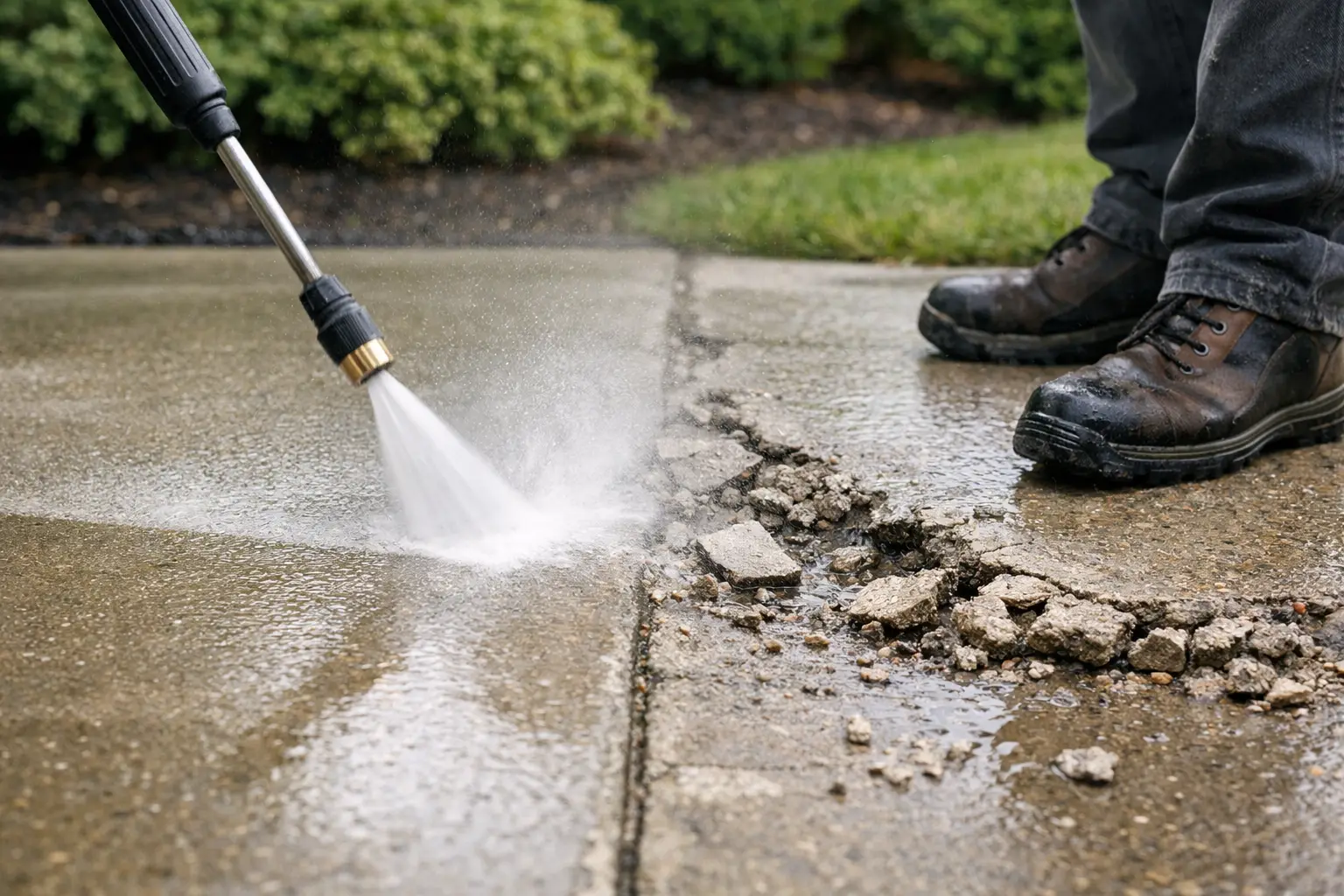
Etching is one of the most common problems. This happens when the spray cuts into the top layer and leaves behind permanent wand marks or streaks. Pitting is another issue, where small bits of the surface break away and leave tiny craters. If the concrete was already compromised, pressure washing can also widen cracks or force water deeper into weak areas.
There is also a cosmetic problem people do not expect. When concrete is cleaned unevenly, the driveway or sidewalk can end up looking worse because the bright, freshly washed sections contrast sharply with untouched or overworked areas. That kind of result is frustrating because you paid for cleaning but ended up with a surface that looks inconsistent.
Why concrete gets damaged during cleaning
Most pressure washing damage comes down to operator error, not the idea of pressure washing itself. The machine may be too powerful for the job, but the bigger issue is usually how it is used.
Holding the nozzle too close to the surface is a common mistake. Even a suitable machine can gouge concrete if the spray tip is only inches away. Using the wrong nozzle can also concentrate the stream too tightly, creating lines and pressure scars instead of an even clean. Moving too slowly over one area has the same effect. The water cuts deeper the longer it stays in one spot.
Detergents can play a role too. Some stains need pretreatment, but harsh or poorly chosen chemicals can affect the surface, especially if they are not rinsed properly. That is one reason professional concrete cleaning is not just about force. It is about using the right combination of cleaning solution, dwell time, water pressure, and surface treatment.
Can pressure washing damage concrete that is already old or cracked?
Yes, and this is where caution matters most. Concrete does not age evenly. One driveway may be solid after 20 years, while another has weak spots after far less time because of settling, moisture issues, poor installation, or heavy use.
If a slab is already cracking, scaling, or crumbling, pressure washing can expose those defects faster. It does not create every problem from scratch, but it can reveal or worsen the ones that are already there. Think of it like washing a sun-damaged painted surface. The cleaning is not always the root cause of the weakness, but it can be the moment that makes the weakness obvious.
This does not mean old concrete should never be cleaned. It means the method should be more careful. Lower pressure, wider fan tips, pretreatment, and surface cleaners often produce a safer result than direct high-pressure wand work. A good contractor will inspect first and tell you if a section needs special handling rather than pretending every slab can take the same treatment.
The safest way to clean concrete
Safe concrete cleaning starts with evaluating the surface. Is it standard broom-finish concrete, decorative concrete, or a heavily worn slab? Are there oil stains, algae, rust, tire marks, or efflorescence? Has it been sealed? Is there visible cracking or flaking? Those answers affect the cleaning plan.
In many cases, the safest method is not maximum pressure. It is controlled pressure paired with the correct detergent and a professional surface cleaner. Surface cleaners are especially helpful on driveways, sidewalks, and parking areas because they distribute pressure more evenly than a handheld wand. That reduces the risk of stripes and patchy cleaning.
Technique matters just as much as equipment. Consistent motion, proper stand-off distance, and careful edge work help protect the finish. The goal is to remove buildup without chewing into the concrete. When done correctly, the surface looks refreshed and uniform, not freshly attacked.
For residential and commercial properties alike, this is the difference between quick blasting and professional cleaning. One creates risk. The other protects the investment.
When DIY pressure washing makes sense and when it does not
Some homeowners rent a machine and handle light cleaning on newer, sound concrete. If the surface is in good condition and the operator understands how to use low to moderate pressure correctly, that can work for basic dirt and dust.
But DIY gets risky fast when the slab is older, stained, decorative, or already damaged. Rental machines are often more aggressive than people expect, and many users start too close, move too slowly, or use the wrong tip. That is when permanent marks happen.
Commercial properties raise the stakes even more. High-traffic walkways, dumpster pads, storefront entries, and parking areas need a clean appearance, but they also need consistency and safety. Uneven cleaning, splashback, and surface damage are not small issues when customers or tenants are involved.
That is why many property owners choose a trusted local company that understands surface-specific cleaning. A professional team can usually tell within minutes what the concrete can handle and what method will produce premium results without avoidable wear.
How to prevent pressure washing damage on concrete
The best protection is simple. Do not assume every concrete surface should be cleaned the same way. Newer concrete can still be scarred. Older concrete can still be cleaned safely. The deciding factor is how the work is performed.
If you are hiring the job out, ask whether the company adjusts pressure by surface type, uses surface cleaners where appropriate, and inspects for pre-existing damage before starting. Licensed and insured service matters here because it shows the contractor takes the work seriously and stands behind the result.
If you are handling it yourself, use a wide fan tip, keep a safe distance, test a small area first, and avoid lingering in one spot. If the slab shows signs of wear, back off rather than pushing harder. More force is rarely the smart answer.
Concrete cleaning should improve curb appeal, not create repairs. When the method matches the surface, pressure washing is a safe and effective way to remove grime, brighten the property, and protect the look of your home or business. If you are unsure what your concrete can handle, getting an expert opinion before the cleaning starts is the easiest way to avoid an expensive mistake.
