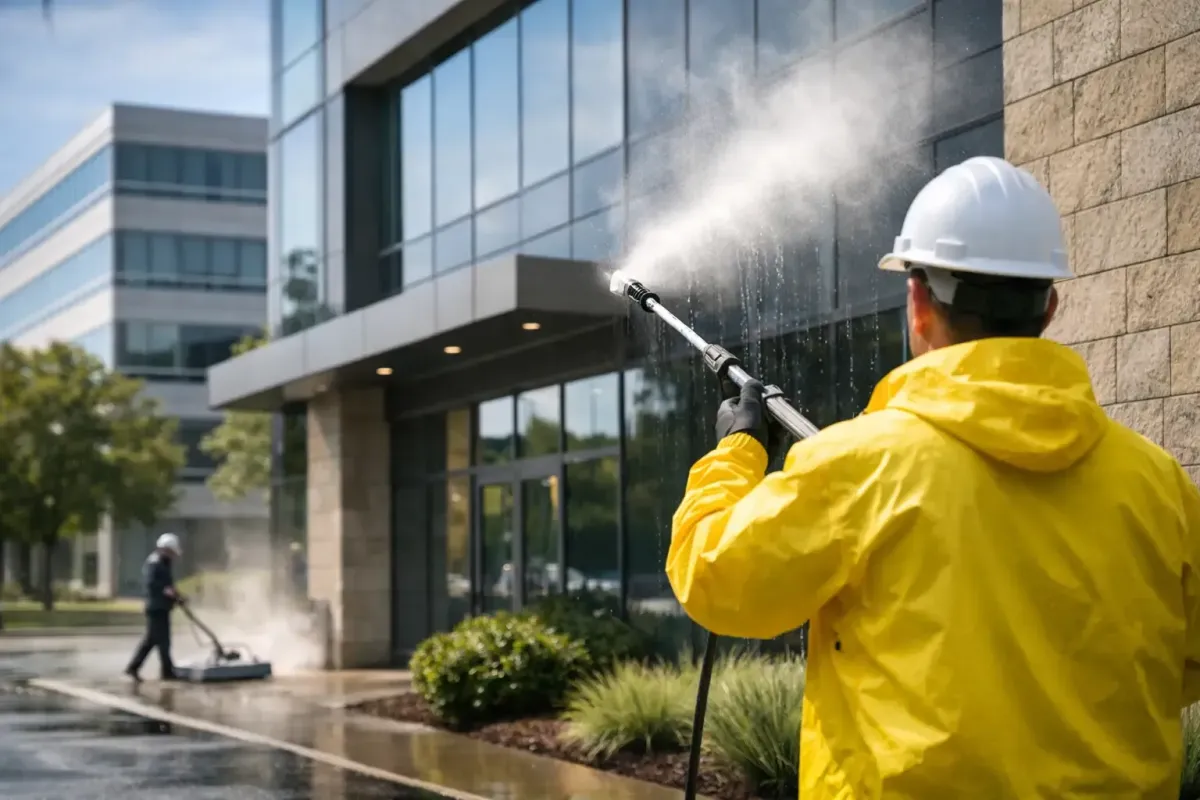
Commercial Exterior Cleaning That Protects Value
A stained storefront, algae on stucco, and black streaks along walkways send a message before anyone reaches the door. Commercial exterior cleaning is not just about appearance. It protects your property, supports your brand image, and helps you stay ahead of the kind of buildup that turns into bigger maintenance problems.
For property owners and managers in Greater Los Angeles, that matters. High traffic, dust, pollution, sprinkler overspray, bird droppings, grease, mildew, and seasonal grime all collect fast. If the exterior is ignored for too long, surfaces can start to look older than they are, and tenants, customers, or visitors notice right away.
Why commercial exterior cleaning matters
A clean building exterior does more than improve curb appeal. It gives people confidence in the way the property is managed. Whether you run a retail center, office building, restaurant, apartment complex, medical office, or industrial site, the outside condition of the property affects first impressions every single day.
There is also a practical side. Dirt, organic growth, and staining do not just sit on the surface harmlessly. Mold, mildew, algae, and grime can trap moisture, discolor finishes, and wear down materials over time. Concrete can become slippery. Painted surfaces can dull. Roof lines can develop streaking. Gutters can clog and overflow. What starts as a cosmetic issue can become a maintenance issue if it is left alone.
That is why smart property maintenance is proactive. Cleaning the exterior on a regular schedule is usually more cost-effective than waiting until the property looks neglected or damage starts to show.
What commercial exterior cleaning usually includes
Commercial exterior cleaning can cover a wide range of surfaces and problem areas. The right scope depends on the type of property, the materials involved, and the level of buildup present.
In many cases, the work includes building washing, concrete cleaning, sidewalk and entryway cleaning, dumpster pad cleaning, storefront washing, parking area pressure washing, gutter cleaning, and roof washing. Some properties need routine touch-ups in high-visibility areas. Others need a full property refresh before leasing, inspections, or a busy season.
Not every surface should be cleaned the same way. That point gets missed often, and it is where experience matters. Concrete may respond well to higher-pressure cleaning, while painted siding, stucco, roof materials, and delicate finishes often require soft washing or lower-pressure methods with the right cleaning solutions. The goal is simple - remove buildup safely without causing surface damage.
Pressure washing vs soft washing for commercial exterior cleaning
This is where many property owners have questions, and for good reason. The wrong cleaning method can leave marks, force water behind surfaces, or wear away finishes that are expensive to repair.
Pressure washing uses higher water pressure to break up dirt and staining on durable surfaces like concrete, some masonry, and certain hardscape areas. It is highly effective when used correctly, especially for walkways, loading areas, curbs, and other high-traffic surfaces.
Soft washing uses lower pressure combined with specialized cleaning agents to treat organic growth, mildew, algae, and surface contamination on more delicate materials. It is often the better option for stucco, painted exteriors, siding, roofing, and other surfaces where blasting with high pressure would be risky.
The trade-off is straightforward. High pressure can deliver strong results on tough surfaces, but it is not universal. Soft washing is safer for sensitive materials, though it relies more on proper chemical application and dwell time. A dependable contractor knows when to use each method and how to tailor the approach to the property.
Common issues on Los Angeles area commercial properties
In the Greater Los Angeles Area, exterior buildup tends to be a mix of urban residue and moisture-related staining. Dust and air pollution cling to walls and ledges. Hard water from irrigation systems leaves mineral marks on concrete and lower wall sections. Shaded areas can develop green algae or mildew. Restaurants and retail sites often deal with grease, gum, and high foot traffic stains.
Multi-tenant properties have another challenge - consistency. One neglected walkway, dirty breezeway, or stained entrance can make the whole property feel uneven, even if other areas are in good shape. That is why many owners and managers focus on high-visibility zones first, then build a recurring maintenance plan around the rest of the property.
Timing also matters. A shopping center before a tenant tour, an office building before inspections, or an apartment complex before peak leasing season may need cleaning on a tighter timeline. Fast quoting, clear scheduling, and reliable follow-through make a real difference when deadlines are involved.
How often should commercial exterior cleaning be scheduled?
It depends on the property type, the location, and the amount of daily traffic. A restaurant patio or storefront in a busy commercial corridor may need more frequent service than a small office building with minimal foot traffic. Apartment communities, medical offices, and retail centers often benefit from recurring service because appearance standards stay high and usage stays constant.
For many properties, quarterly or semi-annual cleaning keeps buildup under control and prevents the exterior from slipping into a condition that requires a much heavier restoration. Some sites need monthly spot service for entrances, sidewalks, or dumpster areas. Others only need larger seasonal cleanings.
The best schedule is one that balances appearance, budget, and surface protection. Cleaning too infrequently usually costs more in the long run because stains set deeper and surfaces require more aggressive treatment later.
What to look for in a commercial exterior cleaning company
Commercial work is different from a basic residential wash. There are more moving parts, more liability concerns, and often more pressure to minimize disruption. That is why professionalism matters as much as the equipment.
Look for a company that is licensed and insured, communicates clearly, and understands how to clean different materials safely. You also want a contractor that shows up on time, gives straightforward estimates, and can explain the plan without overcomplicating it.
For property managers, responsiveness is a major factor. Delays in quoting, vague scheduling, or poor communication create extra work. A reliable contractor makes the process easier, not harder. They should be able to assess the property, recommend the right cleaning method, and set clear expectations for results.
Trust matters too. If a company stands behind its work with a satisfaction-focused approach, that usually tells you something about how they operate on site. Whales Pressure Washing has built its reputation around exactly that kind of dependable, detail-oriented service.
What a smooth cleaning process should feel like
The process should not be complicated. A professional commercial exterior cleaning service starts with a clear assessment of the property, the surfaces involved, and the level of buildup. From there, you should get a fast quote, a practical service recommendation, and a straightforward schedule.
On the day of service, the crew should work with care around entrances, tenants, customers, parked vehicles, and sensitive areas. Good communication matters before, during, and after the job. You should know what is being cleaned, what method is being used, and what kind of results to expect.
Afterward, the property should look cleaner, brighter, and better maintained without the stress of chasing updates or dealing with avoidable damage. That is the standard commercial customers should expect.
Commercial exterior cleaning is preventative maintenance
Many owners wait until the building looks bad enough to act. That approach is understandable, but it is rarely the most efficient one. Exterior cleaning works best as preventative maintenance. It helps protect surfaces, preserve a professional appearance, and reduce the chance that small issues turn into costly repairs.
A cleaner property is easier to manage. It photographs better for leasing and marketing. It reflects well on the businesses inside. It also shows tenants, customers, and visitors that the property is cared for.
If you manage commercial property in Los Angeles, keeping the exterior clean is not extra. It is part of protecting the investment and presenting it the right way. When the right team handles the work with safe methods, clear communication, and dependable follow-through, the whole process becomes simple - and the results speak for themselves.
A well-kept exterior gives people confidence before a single word is exchanged, and that is a strong place for any property to start.
