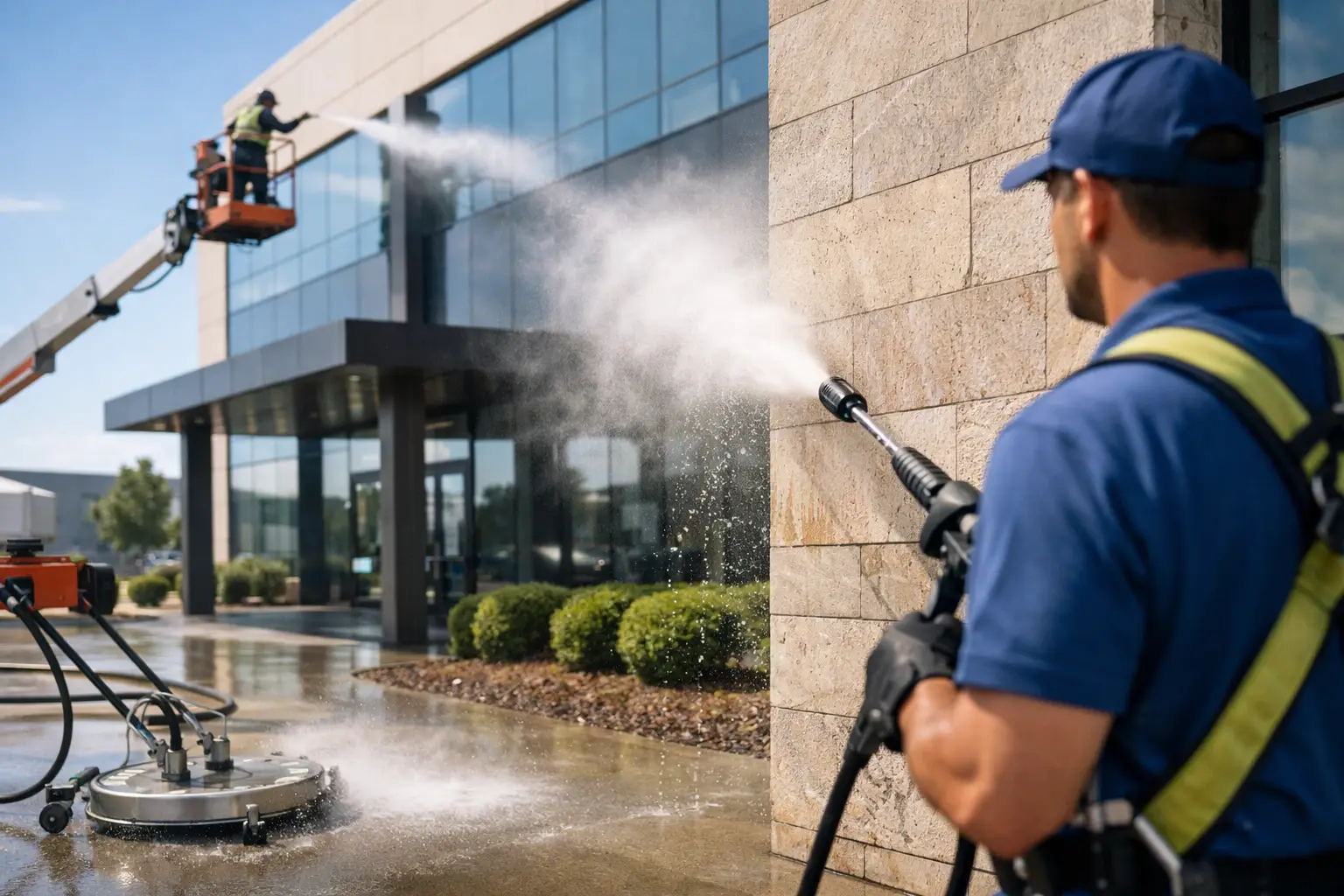
Commercial Property Washing Guide
A stained walkway, gum-marked entry, or mildew on the front elevation does more than look bad. It signals neglect to tenants, customers, and anyone sizing up your property. This commercial property washing guide is built for owners and managers who need clean, professional results without risking damage, tenant disruption, or wasted budget.
Why commercial property washing matters more than most owners expect
Exterior cleaning is often treated like a cosmetic extra until complaints start coming in. A dirty storefront can affect first impressions. Slippery algae on concrete can create safety concerns. Built-up grime on stucco, painted surfaces, dumpster pads, and breezeways can make an otherwise well-run property feel poorly maintained.
For commercial buildings in the Greater Los Angeles Area, the problem is rarely just dirt. It is layered traffic film, urban dust, grease, beverage spills, mildew, tree sap, bird droppings, and irrigation-related staining. Different surfaces collect different types of buildup, and each one needs the right approach.
That is where many property owners get stuck. They know the building needs attention, but they do not always know what method is safe, how often cleaning should happen, or how to avoid turning a simple wash into a liability issue.
A practical commercial property washing guide for better results
The first step is understanding that not every surface should be pressure washed the same way. High pressure can clean concrete effectively, but it can also scar softer materials, force water behind siding, strip paint, or leave etched marks if used carelessly. A good plan starts with matching the cleaning method to the material.
Know which method fits the surface
Concrete sidewalks, loading areas, parking stalls, and dumpster pads usually respond well to professional pressure washing. These hard surfaces can handle stronger cleaning, especially when oil, gum, food residue, and dark traffic patterns have built up over time.
Stucco, painted exteriors, some siding, signage areas, and delicate finishes often need a softer approach. Soft washing uses lower pressure with cleaning solutions designed to break down organic growth and surface grime without the force that can damage the material. On many commercial buildings, the best result comes from using both methods where they belong.
This is one of the biggest trade-offs in exterior cleaning. Aggressive washing may look faster on the front end, but if it damages paint, mortar, sealant, or decorative finishes, the real cost goes up quickly. Safer, surface-specific cleaning usually delivers better long-term value.
Start with the highest-visibility areas
If the budget does not allow for a full-property wash right away, prioritize the areas people notice first. Front entries, sidewalks, storefront approaches, signage surrounds, dumpster enclosures, common walkways, and customer-facing patios have the biggest impact on appearance.
For multi-tenant properties, high-traffic corridors and shared access points should move up the list. These spots shape how clean the entire site feels, even if the rest of the property is in decent shape.
That said, back-of-house areas should not be ignored for too long. Service corridors, loading zones, and trash areas often create odor, staining, and drainage issues that eventually spread into tenant concerns and maintenance headaches.
What should be included in a commercial washing scope
A professional scope should be clear, not vague. Property managers should know exactly what is being cleaned, how it will be cleaned, and what results are realistic before work starts.
At a minimum, the scope should identify the surface types, the cleaning method for each area, any stain treatment that may be needed, access limitations, water availability, and whether work will be done during business hours or off-hours. It should also address runoff control and any areas that need protection, such as electrical fixtures, landscaping, outdoor furniture, or tenant displays.
Realistic expectations matter here. General dirt, algae, mildew, and surface grime usually come off well. Rust, deep oil saturation, old paint, oxidation, and certain hard water stains can improve significantly but may not disappear completely. A trustworthy contractor will say that upfront instead of overpromising.
Frequency depends on traffic, use, and image standards
There is no one-size-fits-all schedule. A busy retail center near major roads may need more frequent sidewalk and storefront cleaning than a quieter office building. Restaurant-adjacent spaces often need regular degreasing around entries, patios, and trash areas. Medical offices, HOAs, and higher-end mixed-use properties usually maintain a tighter appearance standard and clean more proactively.
In Los Angeles area conditions, many commercial properties benefit from recurring service rather than waiting until the site looks rough. Routine cleaning is usually easier, safer, and more cost-effective than trying to reverse years of buildup in one visit.
A good rule is simple. The more foot traffic, visibility, food activity, shade, moisture, or organic growth a property has, the more often it should be evaluated for cleaning.
How to avoid damage, complaints, and wasted money
Commercial property washing looks straightforward until the wrong crew shows up with the wrong equipment. That is when etched concrete, blown-out caulking, damaged paint, flooded entries, or tenant complaints start to happen.
The safest choice is a licensed and insured company that can explain why one area needs pressure washing and another needs soft washing. That level of detail matters. It shows the contractor is thinking about surface protection, not just blasting everything at full power.
Communication matters just as much as technique. On occupied commercial sites, crews need a plan for access, scheduling, noise, safety cones, wet-surface warnings, and any temporary area restrictions. Good work should improve the property without creating unnecessary disruption.
Questions worth asking before you hire anyone
Ask how the company handles different surface types. Ask whether they inspect the property before quoting. Ask what can and cannot be removed. Ask about insurance, scheduling flexibility, and whether they have experience with occupied commercial sites.
You should also ask how they protect surrounding areas and manage runoff. A contractor who answers clearly and confidently is usually easier to work with from start to finish. If the quote is vague, the service often is too.
For many owners and managers, speed matters. Fast quoting is helpful, but clarity matters more. The best estimate is one that tells you what is included, what the process looks like, and what outcome to expect.
Special considerations for Los Angeles commercial properties
Local properties deal with a specific mix of challenges. Dry dust buildup can make buildings look dull fast, especially near high-traffic roads. Irrigation overspray can leave staining on concrete and lower walls. Shaded areas can trap moisture long enough for algae or mildew to grow even in a generally dry climate. Add foot traffic, food service, gum, and urban pollution, and surfaces can age faster than owners expect.
Water use is also part of the conversation in Southern California. Efficient equipment, controlled application, and a clear cleaning plan matter. Professional service should be focused and intentional, not wasteful.
Timing can make a difference as well. Some properties do best with early morning service before tenants and customers arrive. Others need weekend or off-peak scheduling to avoid interruptions. A dependable contractor should be able to work around the site’s real-world needs.
When recurring service makes more sense than one-time cleaning
If your property has constant traffic, visible common areas, or tenant expectations tied to appearance, recurring washing is often the better move. One-time cleaning can restore the site, but recurring service helps keep it from slipping back into the same condition a few months later.
This is especially true for retail centers, HOA common areas, office parks, restaurants, medical plazas, and multi-building properties. Regular maintenance supports curb appeal, helps reduce slip hazards from organic growth, and makes it easier to spot developing issues before they turn into larger repairs.
For property managers, recurring service also simplifies planning. Instead of chasing complaints or scrambling before inspections and tenant visits, the exterior stays under control on a predictable schedule.
A trusted provider should make that process easy. Clear communication, reliable arrival times, surface-specific cleaning, and visible results are what separate professional service from a cheap wash that has to be redone. That is why many local owners and managers look for a company like Whales Pressure Washing that keeps the process simple, safe, and results-driven.
Clean buildings earn trust before anyone walks through the door. If your property looks tired, stained, or overdue, the right washing plan can change that faster than most capital improvements and with far less disruption.
