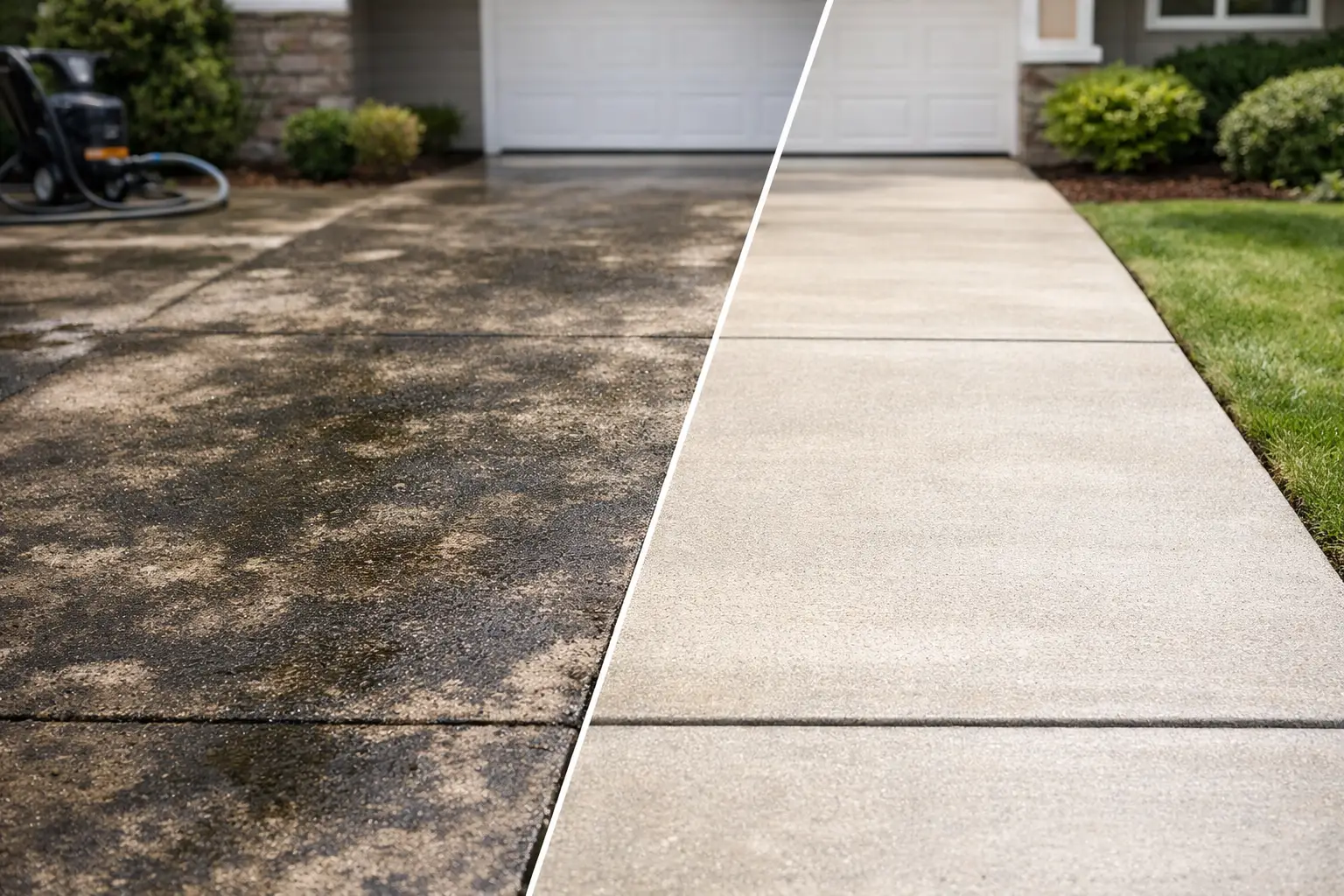
Driveway Cleaning Before and After Results
A driveway can make the whole front of a property look neglected fast. Oil spots, tire marks, algae, rust stains, and ground-in dirt build up slowly, so many homeowners do not notice how bad it has gotten until they see true driveway cleaning before and after results side by side. That contrast is exactly why this service gets attention - the difference is visible, immediate, and often much bigger than expected.
In Greater Los Angeles neighborhoods, driveways take a beating. Heat bakes in stains, sprinklers leave mineral deposits, cars drip fluids, and shaded areas hold moisture long enough for mildew and algae to spread. What starts as a few dark patches can turn into a full surface discoloration that drags down curb appeal and makes an otherwise well-kept home look tired.
The biggest reason before-and-after results look so dramatic is that concrete and pavers hold more contamination than people realize. A driveway does not just get dirty on top. Over time, porous surfaces absorb grime, organic growth settles into the texture, and runoff leaves behind layers that regular rinsing cannot remove. Sweeping helps with loose debris, but it does not restore the original surface color.
What driveway cleaning before and after really shows
When people think about driveway cleaning, they usually picture blasting away dirt. Professional results are more controlled than that. Real driveway cleaning before and after improvement comes from using the right pressure, the right cleaners, and the right process for the surface.
On standard concrete, the visible change often comes from removing embedded grime, algae, mildew, black streaking, and vehicle-related staining. On pavers, the goal may also include cleaning the joints carefully without disturbing the surface. On decorative concrete, the approach needs to protect the finish while still lifting buildup. The result is not just brighter concrete - it is a cleaner, more uniform appearance that makes the property look maintained.
That visual improvement matters for more than looks. A cleaner driveway can reduce slip hazards caused by algae or mildew, improve first impressions for guests or customers, and help protect the surface from long-term buildup. For homeowners planning to sell, it is one of the fastest ways to improve exterior presentation without major renovation.
Why some driveways clean up beautifully and others need extra treatment
Not every driveway responds the same way, and that is where experience matters. Fresh surface dirt usually comes off quickly. Deep oil staining, rust, battery acid marks, irrigation-related discoloration, and heavy organic growth are different. Those stains may need targeted treatment before surface cleaning even starts.
This is where expectations should be honest. Professional cleaning can dramatically improve most driveways, but some stains have penetrated deep enough to leave a shadow even after strong results. Older concrete may also have wear, etching, or color variation that becomes more noticeable once the dirt is gone. That does not mean the cleaning failed. It means the soil was hiding the actual condition of the surface.
A dependable contractor will explain that upfront. The goal is premium visual improvement, not vague promises. Good service means knowing when a stain will likely lift, when it may lighten only partially, and when the surface itself has permanent damage that no wash can reverse.
Common stains that affect before-and-after driveway cleaning
Oil and grease are some of the most common problems on residential driveways. They darken concrete quickly and can soak into porous surfaces if left untreated. Rust is another frequent issue, especially where irrigation systems, metal furniture, or equipment have left marks. Then there is the general layer of traffic grime - tire residue, dirt, dust, and urban fallout that slowly dulls the entire area.
In shaded spots or along edges, organic growth becomes a bigger concern. Algae, mildew, and mold can create green or black discoloration and make the surface slick. That is especially common where water pools or sprinklers hit the same area repeatedly. In those cases, cleaning is not just about appearance. It is part of keeping walkways and drive surfaces safer.
There is also a big difference between a stain and a surface defect. Paint spills, efflorescence, hard water deposits, and old chemical damage may look similar from a distance, but they require different methods. Using the wrong approach can waste time at best and damage the driveway at worst.
Why DIY results often fall short
A lot of property owners try to clean a driveway themselves first, and that makes sense. It seems straightforward until the surface dries and the stripes, missed spots, or remaining stains show up. Consumer-grade equipment usually does not have the same cleaning power, consistency, or surface coverage as professional equipment. More importantly, most DIY attempts focus only on pressure, when chemistry and technique are just as important.
Too much pressure can leave visible wand marks, etch concrete, damage pavers, or blow out joint sand. Too little pressure leaves behind dirt and makes the whole job take longer. Without pretreatment, oil and organic growth may improve only slightly. Without the right rinse and recovery process, dirty water can spread stains instead of removing them cleanly.
That is why strong before-and-after results usually come from a full process, not just a high-pressure spray. Surface-specific cleaning matters. So does understanding what the material can handle safely.
The professional process behind better driveway cleaning before and after photos
The strongest results come from a methodical approach. First, the surface is evaluated. The material, stain types, drainage, surrounding landscaping, and overall condition all affect how the cleaning should be done. A concrete driveway with old oil spots needs a different plan than pavers near planting beds or decorative flatwork around a front entry.
Next comes pretreatment where needed. That can help break down organic buildup, loosen grime, and improve stain removal before surface cleaning begins. Then the driveway is cleaned using equipment designed to deliver even, controlled results across the full area. This is what helps avoid the streaky look that handheld-only cleaning often leaves behind.
Spot treatment may follow for areas that need extra attention. After that, the surface is thoroughly rinsed and checked. A quality final walkthrough matters because some stains look gone while wet and reappear as the driveway dries. Reliable contractors do not rush past that part.
For customers in the Greater Los Angeles Area, this level of detail makes a difference. It is one thing to make a driveway look wetter and temporarily darker. It is another to deliver a true visual reset that still looks clean after it dries.
When driveway cleaning is worth scheduling
If the surface has obvious darkening, algae, black streaks, rust spots, or oil stains, it is already time. Waiting usually makes cleaning harder because buildup gets more embedded. If you are hosting guests, listing a property, finishing a renovation, or trying to improve curb appeal, driveway cleaning is one of the quickest exterior upgrades you can make.
For commercial properties and multifamily buildings, the timing matters even more. A stained entry or dirty parking area affects how tenants, visitors, and customers view the property. Clean concrete signals attention to detail. Dirty concrete suggests the opposite.
There is also a maintenance angle. Routine cleaning can help prevent organic growth from becoming a slip issue and reduce the long-term staining that shortens the life of the surface. It is not always about fixing a severe problem. Sometimes it is about staying ahead of one.
What to look for in a driveway cleaning company
Results matter, but so does how those results are achieved. The right company should be licensed, insured, clear about the process, and confident without overpromising. They should be able to explain how they clean concrete, pavers, and other surfaces safely. They should also be responsive, because no one wants to chase down a contractor just to get a quote.
Local experience helps too. In Southern California, driveway cleaning often means dealing with sun-baked stains, irrigation runoff, dust, and organic growth that behaves differently depending on shade and moisture. A company that understands those conditions can usually diagnose issues faster and clean more effectively.
That is why many homeowners and property managers choose a specialist like Whales Pressure Washing. The value is not just in making the driveway look better for a day. It is in getting premium results through a safe, professional process with clear communication and dependable service from start to finish.
A clean driveway changes more than the concrete under your car. It sharpens the whole property, makes maintenance feel current again, and gives you one of the most satisfying exterior upgrades you can actually see the moment the job is done.
