How to Clean Clogged Gutters Safely
That overflow you see spilling over the front edge of the gutter is not just an eyesore. It is a warning sign. When homeowners ask how to clean clogged gutters, they are usually already dealing with standing water, roof runoff pouring in the wrong direction, or debris packed so tightly that the downspout has stopped doing its job.
In Greater Los Angeles, clogged gutters can sneak up fast. Dry leaves, palm debris, roof grit, dust, seed pods, and windblown buildup collect over time, then one good rain exposes the problem all at once. The result can be fascia damage, stained siding, foundation issues, landscape erosion, and unnecessary wear on your roofline. Cleaning gutters is not complicated in theory, but doing it safely and thoroughly is what matters.
How to clean clogged gutters without making a mess
The basic job is simple. Remove the debris, flush the channels, clear the downspouts, and make sure water flows away from the structure. The part that changes from house to house is access, buildup level, and roofline height.
Start with the right setup. You need a stable ladder positioned on even ground, work gloves, eye protection, a small scoop or gutter tool, a bucket or debris bag, and a garden hose with a spray nozzle. If the gutters are on a single-story home and the roofline is easy to reach, this can be a manageable maintenance task. If you are dealing with a steep roof, second-story gutters, brittle gutter sections, or heavy blockage, the risk climbs quickly.
Before you start scooping, check the gutter runs for sagging sections, separated joints, and visible rust or cracking. A clogged gutter often hides damage underneath the debris. If the system is already pulling away from the fascia, leaning your weight into the cleanup can make things worse.
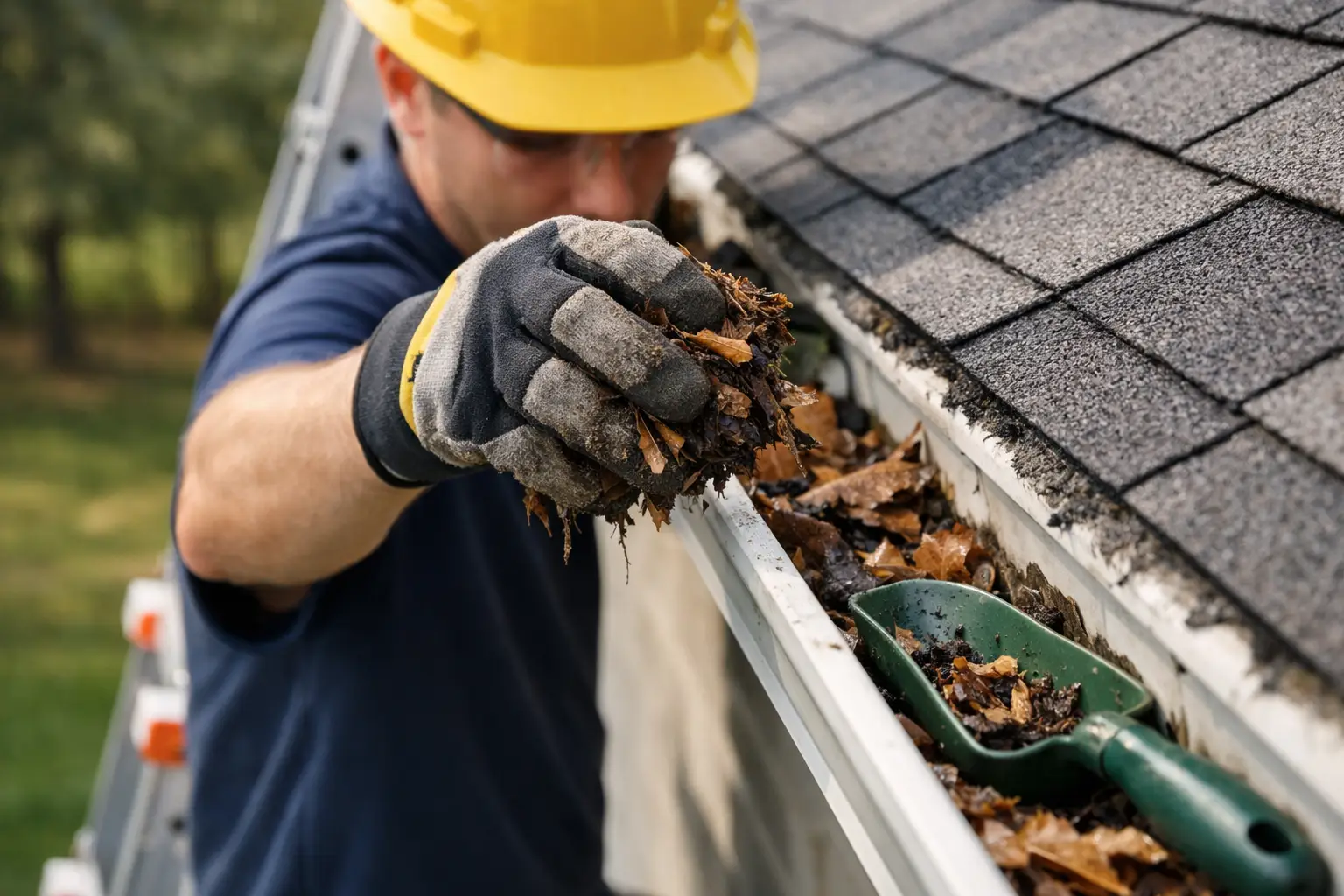
Once you are set up, remove debris by hand or with a scoop and work in small sections. Drop the material into a bucket instead of throwing it onto the landscaping below. Wet gutter sludge stains concrete, dirties walls, and turns cleanup into a bigger project than it needs to be. Move steadily and clear each run until you reach the downspout opening.
After the solid debris is out, rinse the gutter with a hose. This step tells you whether water is moving properly and helps wash out the smaller grit that causes long-term wear. If water backs up instead of draining, the downspout is clogged and needs to be cleared next.
Clearing downspout clogs the right way
A lot of gutter problems are really downspout problems. The top of the gutter may look full because water has nowhere to go.
The easiest fix is to spray water from the top down after the gutter channel has been cleaned. Sometimes that pressure is enough to push leaves and roof sediment through. If that does not work, disconnect the bottom elbow if it is accessible and flush from below. A plumber’s snake can help break up packed debris, especially when a clog has turned into a mud-like plug.
Be careful with high pressure. Too much force can separate fittings or expose weak joints. That is one reason professional cleaning often delivers better results than a quick DIY rinse. It is not just about removing the visible debris. It is about restoring full flow without damaging the gutter system.
If the downspout drains but spills near the home, check the extension or splash block too. Water should move away from the foundation, not pool next to it.
Safety matters more than speed
If you are looking up how to clean clogged gutters, the first question should not be what tool to buy. It should be whether the job is safe for your property and your body.
Ladder work causes more problems than most homeowners expect. Uneven soil, slippery walkways, landscaping, overhead lines, and awkward roof angles all add risk. Even on a one-story property, reaching too far to save time is how minor maintenance turns into a fall.
There is also the condition of the debris itself. Gutters can hold mold, insect nests, rodent droppings, sharp roofing granules, and soaked organic matter that is heavier than it looks. Gloves and eye protection are not optional. Neither is common sense. If a gutter has standing water, plant growth, or clear signs of long-term neglect, that usually means the blockage is more severe than it appears from the ground.
For commercial buildings and larger homes, safety becomes even more important. Multi-level access, larger drainage systems, and tenant or customer traffic call for a more controlled approach. In those cases, hiring a licensed and insured team is often the smart move.
What homeowners miss during gutter cleaning
A quick cleanout can solve the immediate overflow, but it does not always fix the reason the clog keeps coming back.
One common issue is roof debris volume. Some homes near mature trees or lined with palms simply collect material faster than others. In those cases, once-a-year cleaning may not be enough. Another issue is improper gutter pitch. If the gutter is not sloped correctly, water slows down, debris settles faster, and clogs build up more often.
You may also have hidden buildup in the valleys where roof runoff dumps into one section of the gutter. These high-volume areas wear faster and collect more sediment. If they are not cleaned thoroughly, the gutter can look clear at a glance but still drain poorly during rain.
Then there is damage. Loose brackets, separated seams, crushed sections, and old sealant can all affect performance. Cleaning helps reveal those problems, but it does not repair them. That is why a professional service has value beyond labor. A trained crew can spot the issues that keep your drainage system from working the way it should.
When DIY works and when it does not
If your home is single-story, the gutter line is easy to access, and the debris is light, DIY cleaning can be reasonable. It is a practical option for homeowners who stay on top of maintenance and want to prevent larger issues.
But there is a difference between light upkeep and a full clogged-gutter situation. If water is overflowing at multiple points, downspouts are blocked solid, gutters are packed with wet debris, or the system sits high above concrete or sloped ground, doing it yourself may cost more in risk than it saves in money.
This is especially true if you have seen staining on siding, erosion below the roof edge, or signs that water is backing up under shingles. At that point, the job is no longer just about cleanup. It is about protecting the property.
For many homeowners and property managers, the best solution is simple. Bring in a trusted local exterior cleaning company that can handle the work safely, inspect the system, and leave the property looking clean when the job is done.
How often should gutters be cleaned?
It depends on the property. In Southern California, some homes can go longer between cleanings than properties in heavily wooded climates, but that does not mean gutters can be ignored. Windblown debris, dry-season buildup, and sudden rain events still create real problems.
A good rule is to inspect gutters at least twice a year, usually before the rainy season and again after periods of heavy debris drop. Homes near trees, hillsides, or high-dust areas may need more frequent service. Commercial properties often benefit from scheduled maintenance because appearance and drainage reliability both matter.
If your gutters have overflowed once, do not wait for the next storm to see if it happens again. Recurring clogs are easier and less expensive to deal with before they cause visible damage.
Why professional gutter cleaning pays off
Professional gutter cleaning is not just about convenience, though that matters. It is about safer access, better debris removal, proper downspout flushing, and a cleaner final result around the home or building.
A dependable service also gives you clarity. You know whether the gutter system is functioning, whether there are visible trouble spots, and whether anything needs attention before it turns into a larger repair. For homeowners who care about curb appeal and preventative maintenance, that peace of mind has real value.
For property managers and business owners, the benefit is even more direct. Clean gutters help prevent water-related exterior issues that affect image, maintenance budgets, and tenant or customer experience. It is a small service that supports the condition of the whole property.
At Whales Pressure Washing, this kind of work fits into a bigger standard of care - safe methods, clear communication, premium results, and service that makes exterior maintenance easier from start to finish.
If your gutters are overflowing, sagging, or draining slowly, the smartest next step is the one that protects your property without adding unnecessary risk. Clean flow above the roofline keeps a lot of expensive problems from showing up below it.
