How to Clean Concrete Driveway the Right Way
A concrete driveway can make the whole front of a property look sharp - or make it look neglected fast. Oil drips, tire marks, algae, rust, and plain old dirt build up slowly, then all at once your driveway starts dragging down your curb appeal. If you're wondering how to clean concrete driveway surfaces without wasting a Saturday or damaging the slab, the right method depends on what you're dealing with and how aggressive you need to get.
In Southern California, driveways take a steady beating from sun, dust, traffic, irrigation overspray, and organic buildup. That means a quick rinse usually will not cut it. Good results come from matching the cleaner, tools, and pressure to the stain instead of blasting everything at full force and hoping for the best.
How to Clean Concrete Driveway Without Damaging It
The biggest mistake homeowners make is treating concrete like it is indestructible. It is tough, but it is also porous. Too much pressure can leave visible striping, etch the surface, loosen weak top layers, and push grime deeper into surrounding areas. If the driveway is older, cracked, patched, or already flaking, a careless wash can make those problems stand out even more.
Start by clearing the area completely. Move vehicles, trash bins, planters, and anything else sitting on the slab. Sweep away loose dirt and debris so you are not grinding grit into the surface while you clean. If you have nearby landscaping, give plants a light rinse and cover anything delicate before applying any cleaning solution.
Next, take a close look at the stains. General dirt and mildew need a different approach than motor oil or rust. This matters because the wrong cleaner can waste time, bleach surrounding surfaces unevenly, or simply fail to lift the stain.
The Best Way to Clean a Concrete Driveway Step by Step
For light to moderate grime, pre-treat the concrete with a driveway-safe detergent or degreasing cleaner diluted according to the label. Let it dwell long enough to break up dirt, but do not let it dry on the surface. Scrub heavily soiled spots with a stiff-bristle brush, especially where tires sit or water collects.
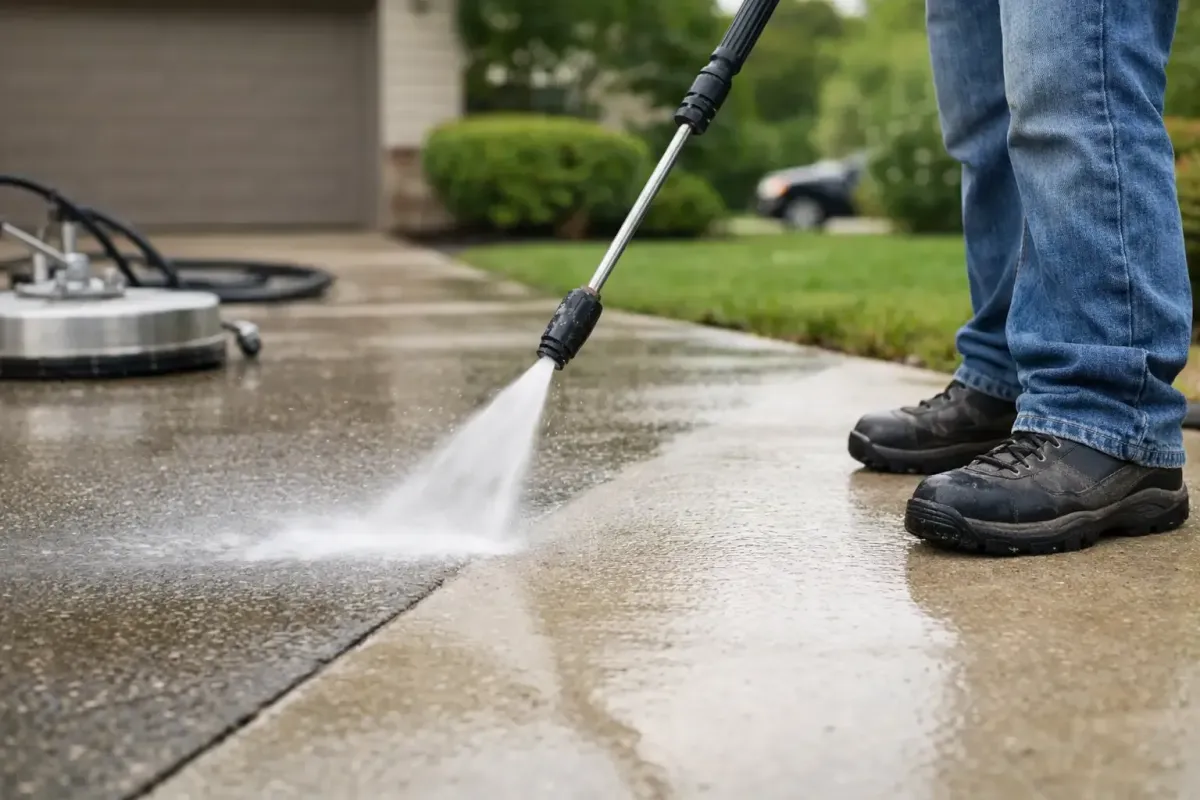
After that, rinse with a garden hose or pressure washer. If you use a pressure washer, stay controlled. A fan tip is safer than a pinpoint tip, and even coverage matters more than raw pressure. Work in overlapping passes and keep the wand moving. For broad, even cleaning, a surface cleaner attachment usually delivers a better finish than a standard wand because it reduces streaks and hot spots.
If the driveway only has dust, light mildew, or seasonal discoloration, this may be enough. But if dark spots remain, you are likely dealing with set-in staining that needs targeted treatment.
How to Handle Oil Stains
Oil is one of the most common driveway complaints, and it is also one of the most stubborn. Fresh oil is much easier to deal with than old stains that have soaked into the concrete over time.
For fresh spots, absorb as much as possible first with an absorbent material. Then apply a degreaser made for concrete and scrub it in thoroughly. Let it sit, scrub again, and rinse. You may need more than one round. That is normal.
For older oil stains, expectations need to be realistic. You can often improve them dramatically, but some deep stains may leave a shadow, especially on older or unsealed concrete. Pressure washing helps after pretreatment, but pressure alone rarely removes oil completely.
How to Remove Rust, Battery, and Fertilizer Stains
Rust stains need a rust-specific concrete cleaner. General soap usually will not touch them. Apply carefully, follow the product instructions closely, and avoid overspray onto nearby surfaces that could discolor.
Battery acid or fertilizer staining can be trickier because the concrete may be chemically altered, not just dirty. In those cases, cleaning can improve the appearance, but full restoration is not always possible. That is one of those situations where honest expectations matter more than overpromising.
How to Treat Mold, Mildew, and Algae
If your driveway gets shade, moisture, or sprinkler overspray, organic growth can take hold fast. It often shows up as green or black discoloration and can make the surface slick.
A cleaner designed to kill and lift organic buildup works best here. Let it dwell, scrub problem areas, and rinse thoroughly. If the growth keeps coming back, the real fix may also involve adjusting drainage, overspray, or shaded conditions around the driveway.
Pressure Washing a Concrete Driveway: When It Works Best
Pressure washing is often the fastest way to restore a concrete driveway, but technique matters. Concrete can usually handle more pressure than wood or painted surfaces, yet there is still a right range. If you go too hard, you can leave wand marks or etching that are more noticeable than the original dirt.
For homeowners using rental equipment, this is where problems happen. The machine may be strong enough, but using the wrong nozzle, standing too close, or pausing too long in one area can create permanent unevenness. A cleaner driveway should look uniform when it dries, not zebra-striped.
Professional service makes the biggest difference when the driveway is large, heavily stained, or connected to other surfaces like pavers, stucco, garage floors, or decorative concrete. A trained crew can adjust pressure, detergents, and dwell time for the surface instead of using a one-size-fits-all approach.
When DIY Makes Sense and When It Doesn't
If your driveway has light dirt, no major staining, and you already have the right tools, a DIY cleaning can work fine. It is a practical maintenance task when done carefully.
If you are dealing with years of buildup, oil spots, rust, algae, or an expensive decorative finish, the margin for error gets smaller. The same goes for commercial properties and multi-unit buildings where appearance matters and downtime needs to stay low. In those cases, professional cleaning usually saves time and delivers a better result with less risk.
For many property owners in the Greater Los Angeles Area, the real value is not just getting the concrete cleaner. It is getting premium results without guessing which product to buy, how much pressure to use, or whether the surface will be damaged. That confidence matters.
How to Keep a Concrete Driveway Cleaner Longer
Once the driveway is clean, a few simple habits help it stay that way. Sweep regularly so dirt does not build up into a stained layer. Clean spills early, especially oil and automotive fluids. Check sprinkler patterns so they are not constantly wetting the slab. And if your driveway is a good candidate for sealing, that added protection can make future cleanups easier by reducing how quickly stains soak in.
Maintenance timing also matters. Waiting until the driveway looks heavily neglected usually means more labor, stronger treatment, and less predictable stain removal. Regular cleaning is easier on the surface and usually easier on the budget too.
How to Clean Concrete Driveway Areas Near Your Home Safely
Driveways often sit right next to garage doors, walkways, landscaping, and lower exterior walls. That means runoff and overspray need attention. Strong cleaners can affect nearby materials, and dirty water should be managed instead of pushed into places where it can stain or pool.
This is another reason surface-specific cleaning matters. A dependable contractor will look at the whole area, not just the concrete itself. That includes protecting adjacent surfaces, working with the right equipment, and making sure the finished result looks clean and consistent from curb to garage.
A clean driveway does more than remove stains. It gives the property a cared-for look the moment someone pulls up. If you want that sharp, professional finish without the trial and error, Whales Pressure Washing helps homeowners and property managers get fast quotes, safe cleaning, and results you can feel good about. The right driveway cleaning should be simple, effective, and one less thing to worry about.
