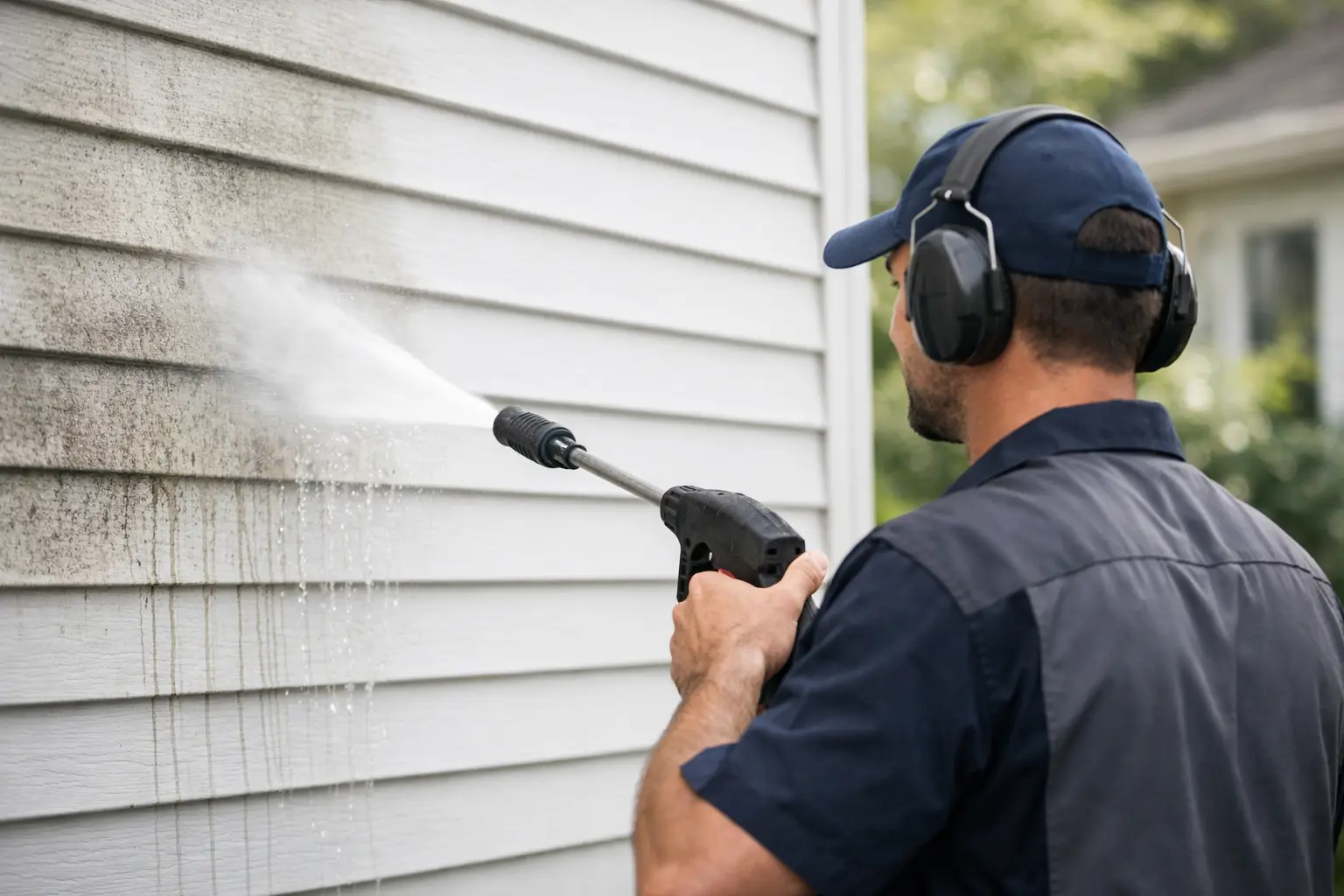
How to Pressure Wash Siding Safely
If your siding looks dull, streaky, or green around the shaded sides of the house, you are probably wondering how to pressure wash siding without turning a simple cleanup into an expensive repair. That is the right question to ask. Siding can handle a proper wash, but it does not forgive bad technique. Too much pressure, the wrong spray angle, or skipping prep can force water behind the panels, strip paint, or scar the surface.
For most homes, the goal is not brute force. It is controlled cleaning that removes dirt, mildew, algae, spider webs, and traffic film while protecting the material underneath. In places like Greater Los Angeles, where dry dust, air pollution, tree debris, and shaded moisture can all collect on exterior walls, siding often needs more than a quick rinse. It needs the right method.
How to pressure wash siding the right way
Start by identifying what kind of siding you have. Vinyl, fiber cement, wood, engineered wood, stucco-adjacent trim areas, and painted surfaces all respond differently to water pressure. Vinyl is one of the most common and is often safe to wash with a pressure washer if you keep the PSI moderate and the spray pattern wide. Painted wood and older siding call for more caution because loose paint, dry rot, and weak seams can turn a cleaning job into a bigger issue fast.
Before you touch the machine, walk the perimeter of the house. Look for cracked panels, loose trim, open gaps around windows, damaged caulking, or warped sections. If water can get behind the siding, pressure washing can make that worse. Cover exterior outlets, close all windows and doors tightly, and move patio furniture, grills, planters, and anything else sitting against the walls.
Protect your landscaping too. Pre-rinse plants, cover delicate shrubs if needed, and avoid letting strong detergent dry on leaves. If you are using a house wash solution, that prep matters. A clean house should not come at the expense of your flower beds.
Choose the right pressure and nozzle
This is where many DIY jobs go sideways. People assume stronger pressure means faster results. On siding, that is rarely true. A machine in the 1,300 to 2,000 PSI range is usually enough for residential siding when paired with the right tip and good technique. You do not need a concentrated blast.
Use a 25-degree or 40-degree nozzle for most siding work. A wider fan spreads the force and lowers the risk of visible damage. Stay away from a zero-degree tip. That kind of narrow spray is too aggressive for house siding and can cut into soft materials, etch paint, and drive water where it does not belong.
Keep some distance between the wand and the wall, usually a few feet to start. Test a small, less visible area first. If the surface cleans up with moderate pressure, there is no reason to move closer or crank up the machine. Good results come from consistency, not aggression.
Use detergent when grime is bonded on
Plain water can remove loose dust and cobwebs, but mildew, algae, and baked-on grime usually need help. That is why many professionals rely on a siding-safe cleaning solution before rinsing. The detergent does the heavy lifting so the pressure washer does not have to.
Apply the cleaning mix according to the product directions and let it dwell for a few minutes without drying on the surface. This loosens buildup and makes rinsing easier. If the weather is hot and sunny, work in smaller sections so the solution stays wet long enough to do its job.
There is an important trade-off here. Stronger chemicals can clean faster, but the wrong product can damage paint, dry out nearby plants, or leave streaks if not rinsed well. If you are not sure which cleaner fits your siding type, it is better to stay conservative than to guess.
Soft washing vs. standard pressure washing
Some homeowners use the phrase pressure washing for every exterior cleaning job, but siding is often better cleaned with a soft wash approach. That means lower pressure combined with the right detergents. It is especially useful for older painted siding, delicate finishes, or surfaces with heavy organic growth.
If your siding is fragile, oxidized, chalky, or already showing wear, soft washing is usually the safer path. You still get a dramatic visual improvement, but with less risk to the surface.
Washing technique matters more than speed
When it is time to rinse, work from the bottom section upward while applying cleaner, then rinse from the top down. That helps reduce streaking and keeps dirty runoff from drying over areas you already cleaned. Hold the spray at a downward angle, not upward under the laps of the siding. Spraying up beneath panels is one of the fastest ways to force water behind the exterior.
Use smooth, overlapping passes. Do not hover in one spot, especially on painted or sun-baked surfaces. If a stain does not come off right away, that is a signal to revisit your detergent or dwell time, not to attack the wall with more pressure.
Corners, trim lines, and areas around light fixtures need extra patience. These spots collect grime but also create more chances for splashback and water intrusion. Slow down there. A careful operator gets better results than a fast one every time.
Common mistakes when learning how to pressure wash siding
The biggest mistake is treating all siding the same. What works on a concrete driveway does not belong on a house wall. Siding needs a more controlled approach, especially around seams, vents, soffits, and window trim.
Another common problem is skipping the inspection step. Pressure washing over cracked caulk, loose boards, or failing paint does not clean the issue. It exposes it. Sometimes that is helpful, but you want to know what you are working with before water pressure gets involved.
Ladder use is another risk area. Pressure washing from a ladder is unstable and unsafe for most homeowners. The recoil from the wand can throw off your balance quickly. For second-story areas, extension wands and soft wash methods are usually a better option. If access is still difficult, that is where hiring a licensed and insured professional makes sense.
When not to pressure wash siding
There are times when pressure washing is the wrong move. If your home has damaged wood, open seams, brittle older siding, or peeling paint that is not being intentionally prepped for repainting, washing with pressure can do more harm than good. The same goes for surfaces with signs of water intrusion or hidden structural issues.
It also depends on what you are trying to remove. Red clay stains, deep oxidation, rust marks, and certain sprinkler stains may need specialty treatment beyond a standard wash. More pressure will not always solve those problems.
A practical step-by-step approach
If you want a simple game plan, prep first, test your settings, apply a siding-safe cleaner, let it dwell briefly, then rinse with controlled pressure and a wide spray tip. Keep the nozzle angled downward, maintain distance, and work in manageable sections. Once you finish, inspect the siding again to make sure no debris, residue, or missed areas remain.
After the wash, give the house time to dry fully and check around windows, vents, and lower edges for any signs that water got where it should not. A proper job should leave the siding cleaner and brighter, not soaked behind the walls or stripped at the edges.
For many homeowners and property managers, the real question is not just how to pressure wash siding. It is whether the time, equipment, risk, and cleanup are worth taking on yourself. If the home is large, the siding is delicate, or the buildup is heavy, professional service often saves time and prevents costly mistakes. Companies like Whales Pressure Washing handle that process with surface-specific methods, clear communication, and the kind of detail that protects curb appeal instead of gambling with it.
Clean siding changes how a property looks from the street, but it also helps protect the exterior from long-term buildup and moisture-related staining. If you decide to do it yourself, take the slower and safer route. Your siding does not need maximum force. It needs the right hands and the right method.
