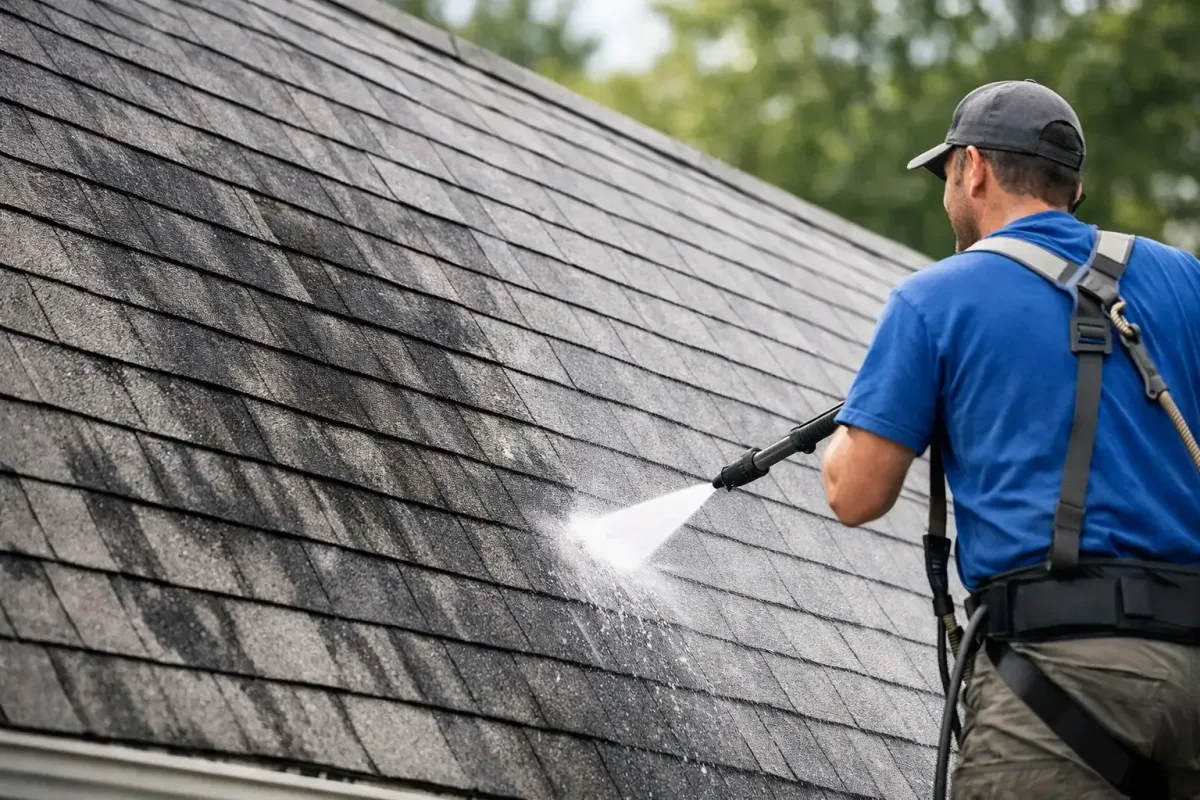
How to Remove Black Streaks From Roof
Those black lines running down your roof are not just making the house look older than it is. In most cases, if you are searching for how to remove black streaks from roof surfaces, you are dealing with algae growth that feeds on moisture and the limestone filler found in many shingles. It is common across Southern California, especially in shaded areas and on roofs that stay damp longer after marine layer mornings or irrigation overspray.
The good news is that black streaks can usually be cleaned. The part that matters is how you clean them. Use the wrong method and you can shorten the life of the roof while trying to improve its appearance.
What causes black streaks on a roof?
The most common culprit is Gloeocapsa magma, a type of airborne algae. It lands on the roof, spreads gradually, and creates those dark streaks that are easiest to spot on lighter-colored shingles. Dirt, mildew, and general grime can add to the discoloration, but algae is usually the main issue.
This matters for more than curb appeal. As buildup spreads, it can trap moisture, contribute to surface wear, and make an otherwise well-maintained property look neglected. For homeowners in places like Pasadena, Glendale, Burbank, and Arcadia, that can affect both pride of ownership and perceived value.
How to remove black streaks from roof safely
If you want real results without damage, the safest approach is almost alwayssoft washing. That means applying a roof-safe cleaning solution at low pressure, allowing it time to break down algae and organic buildup, and then rinsing carefully. The cleaning agent does the work, not high pressure.
That distinction is important. Asphalt shingles are not built to handle aggressive pressure washing. A strong stream can strip away protective granules, loosen shingles, force water underneath roofing materials, and create damage that is expensive to fix. A roof may look cleaner for a moment, but the trade-off is often not worth it.
For tile, composite, and other roofing materials, the exact method can vary. Some roofs tolerate more than others, but pressure still has to be controlled carefully. That is why surface-specific cleaning matters. The right approach depends on the roofing type, age, condition, pitch, and how heavy the buildup is.
Why soft washing is usually the right choice
Soft washing is preferred because it targets the root of the problem instead of just blasting off the surface stain. When algae is properly treated, the roof does not just look better. It stays cleaner longer because the organism has been neutralized rather than partially smeared around.
It is also the better fit for homeowners who want premium visual results without taking unnecessary risks. A roof is one of the most expensive parts of the home. Cleaning it should protect that investment, not put it in danger.
What a professional roof cleaning process looks like
A professional roof wash usually starts with an inspection. The cleaner checks the roofing material, identifies problem areas, notes landscaping nearby, and looks for any pre-existing damage. From there, the cleaning plan is adjusted to the roof rather than using a one-size-fits-all approach.
Plants and surrounding surfaces are protected first. Then a cleaning solution is applied evenly to the affected sections. After enough dwell time, the algae and staining begin to break down. In some cases, light rinsing follows right away. In others, the treatment continues working over time and weather finishes the cleanup naturally. It depends on the roof and the severity of the staining.
That is one reason professional service is worth considering. Roof cleaning is not just about spraying and hoping for the best. It takes the right mix, the right pressure, the right safety setup, and the right judgment.
Should you remove black roof streaks yourself?
It depends on your comfort level, roof height, and the condition of the surface. For a very small, accessible section on a low-slope structure, some property owners try it themselves with a roof-safe cleaner and careful application. But on most homes, DIY roof cleaning carries real risk.
The first issue is safety. Roofs are slippery, especially when algae is present. The second is damage. Many off-the-shelf methods people try, including straight bleach mixes, pressure washer tips, or stiff brushing, can stain nearby areas, harm landscaping, or wear down the roofing material. The third issue is incomplete cleaning. If the algae is not treated properly, the streaks often return faster.
For most homeowners and property managers, hiring a licensed and insured exterior cleaning company is the more dependable move. You get faster results, less risk, and better protection for the roof and surrounding property.
What not to do when cleaning roof streaks
The biggest mistake is using high pressure on asphalt shingles. It may seem faster, but it can remove granules that help protect the roof from sun and weather. Once those are stripped away, you cannot put them back.
Another mistake is scrubbing aggressively. That can grind debris into the surface and create uneven wear. Using harsh chemical blends without proper dilution is another common problem. Stronger is not always better. On a roof, the wrong mix can damage materials, discolor adjacent surfaces, and hurt plants below.
Ignoring the issue for too long is also a mistake. Black streaks usually start as a cosmetic problem, but they rarely improve on their own. The longer algae sits, the more established it becomes.
How long does it take for black streaks to come back?
There is no single timeline because local conditions make a difference. Shade, tree coverage, roof orientation, humidity, nearby moisture sources, and roof material all play a role. A sunny roof with little organic debris may stay clean much longer than a shaded area under overhanging branches.
In Greater Los Angeles, roofs near mature landscaping or exposed to regular morning moisture often see faster regrowth. That does not mean cleaning is not worth it. It means prevention matters.
How to slow future buildup
A few simple steps can help keep streaks from returning too quickly. Trim back branches that create constant shade over the roof. Keepgutters clearso water drains properly. Reduce overspray from sprinklers if water regularly hits roofing edges or walls. Remove leaf debris before it holds moisture against the surface.
If streaking has become a recurring issue, periodicprofessional roof washingcan be part of a smart maintenance plan. That is especially true for homeowners who care about curb appeal or property managers who need buildings to look clean and well-kept year-round.
When to call a professional
If the roof is steep, multi-story, heavily stained, older, or made from a material you are unsure how to clean, it is time to call a pro. The same goes for any roof with fragile areas, visible wear, or landscaping that needs protection during treatment.
A professional can also tell you whether the black streaks are truly algae or part of a larger issue, such as trapped moisture, failing gutters, or surrounding organic buildup. That kind of clarity helps you avoid treating symptoms while missing the source.
For local property owners who want trusted results without the hassle, working with a company that specializes in soft washing makes the process simple. At Whales Pressure Washing, the focus is on safe methods, clear communication, and premium results that restore the look of the property without unnecessary risk.
How to choose the right roof cleaning service
Look for a company that is licensed, insured, and experienced with roof-specific cleaning methods. Ask how they clean asphalt shingles versus tile or composite roofs. If the answer is just pressure washing across the board, keep looking.
A dependable contractor should explain the process clearly, protect surrounding surfaces, and set honest expectations about results and timing. They should also understand that homeowners are not just buying a cleaning service. They are trusting someone to work on one of the most valuable parts of the property.
The best roof cleaning feels straightforward from start to finish. Fast quoting, clear scheduling, and a clean final result go a long way toward making the entire experience low stress.
Black streaks on a roof are common, but they should not be treated casually. The right cleaning method can restore curb appeal, help protect the roof, and save you from costly mistakes. If your roof is starting to show those dark lines, the smartest next step is to handle it early and handle it the right way.
