How to Remove Roof Stains Safely
Those black streaks on a roof do not usually mean the roof is failing. More often, they mean moisture, algae, and debris have had time to settle in. If you are wondering how to remove roof stains without damaging shingles or tile, the method matters as much as the cleaning itself.
In Southern California, roofs take a steady beating from sun, dust, tree debris, and seasonal moisture. Stains can build slowly enough that many property owners ignore them until curb appeal drops or tenants start asking questions. The good news is that most roof staining can be treated. The key is knowing what you are looking at and using a cleaning approach that fits the roof surface.
What causes roof stains in the first place?
The most common roof stains are caused by algae, especially the dark streaks that show up on asphalt shingles. You may also see mildew, moss in shaded areas, lichen, rust marks around metal components, or general grime from dirt and airborne pollution. In neighborhoods with mature trees, leaf tannins and organic debris can make the problem look even worse.
Not every stain should be treated the same way. A black algae streak needs a different approach than rust runoff or packed debris in roof valleys. That is why a quick visual check matters before anyone starts spraying water or applying cleaner.
On many homes, the issue is not just appearance. Organic growth can hold moisture against the roof surface, and debris can slow drainage. Left alone long enough, that buildup can shorten the life of the roof and create preventable maintenance problems.
How to remove roof stains without causing damage
The biggest mistake property owners make is assuming more pressure equals better cleaning. On a roof, that can get expensive fast. High-pressure washing can loosen granules on asphalt shingles, crack older tile, force water under roofing materials, and void manufacturer warranties in some cases.
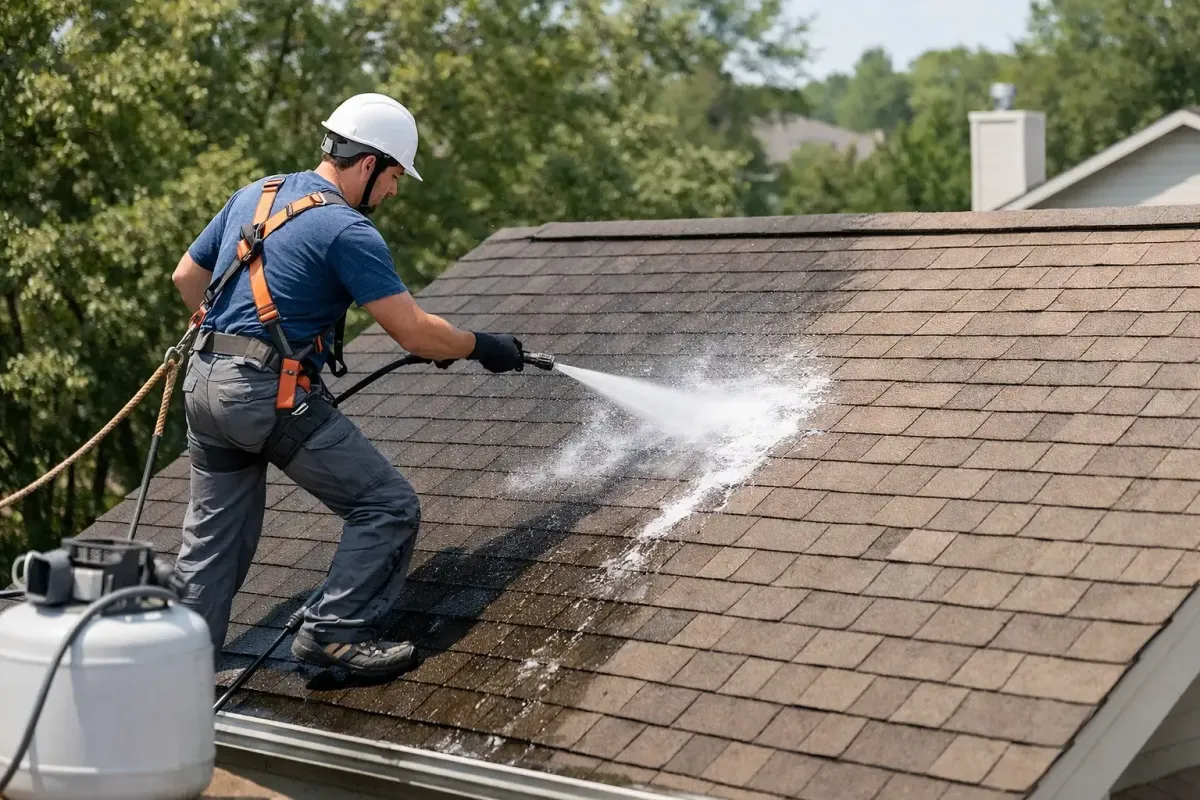
That is why the safest answer to how to remove roof stains is usually soft washing, not pressure washing. Soft washing uses low pressure and cleaning solutions designed to break down algae, mildew, and grime at the source. Instead of blasting the stain off mechanically, the treatment does the work while the roof surface is handled more carefully.
For asphalt shingle roofs, this is especially important. Those shingles rely on protective granules to resist sun exposure and weathering. Once those granules are stripped away, the roof can age faster. Tile and other specialty roofing materials also need surface-specific handling. A roof can look tough from the ground, but the wrong cleaning method can leave visible damage.
The right cleaning method depends on the roof type
Asphalt shingles are the most common place where black streaks show up. They should generally be cleaned with a low-pressure soft wash process. This helps remove staining while protecting the shingle surface.
Concrete and clay tile roofs can also develop algae, dirt, and organic growth, especially in shaded sections. They often need a careful combination of treatment, rinsing, and technician awareness around fragile or aged tiles. Walking patterns matter on tile roofs because cracked tiles can create bigger issues than the original stain.
Metal roofs are usually more durable during cleaning, but they can still be scratched or affected by the wrong chemicals. Rust stains also need to be identified correctly before treatment.
Flat and low-slope commercial roofing systems bring another layer of caution. Drainage points, membrane compatibility, and runoff control all matter. Property managers often need a cleaning plan that improves appearance without disrupting operations or creating slip hazards below.
When DIY roof cleaning makes sense and when it does not
There are a few situations where a careful homeowner can handle minor roof-related cleanup. If the issue is limited to light debris at the roof edge or visible gutter overflow, basic maintenance from a safe position may help. But once actual staining is involved, especially on a pitched roof, DIY starts to carry real risk.
The first risk is personal safety. Roof work is dangerous, even before water and cleaning agents are introduced. The second risk is surface damage. It is easy to use too much pressure, the wrong chemical mix, or too much foot traffic in the wrong place. The third risk is incomplete treatment. A roof might look cleaner right away but still have active algae spores left behind, which means the staining returns sooner than expected.
For most homeowners and commercial property owners, professional roof washing is the safer and more reliable option. It removes the guesswork, reduces liability, and delivers premium visual results without turning a maintenance task into a repair bill.
Signs your roof needs professional stain removal
Some roofs make the decision obvious. If you can see dark streaks from the street, patchy green growth, or heavy buildup under overhanging trees, it is time to take action. The same goes for roofs that look uneven in color, show runoff marks near gutters, or have visible organic growth in shaded sections.
Commercial properties should pay attention even sooner. A stained roofline can affect how the whole building is perceived, especially at storefronts, office buildings, multifamily properties, and managed communities. Clean exteriors signal that the property is maintained. Neglected staining sends the opposite message.
If you are selling, leasing, or simply trying to protect long-term value, roof stain removal is not just cosmetic. It is part of smart exterior maintenance.
What to expect from a professional roof cleaning service
A quality roof cleaning service should start with an inspection, not a one-size-fits-all quote. The contractor should identify the roof material, assess the staining, look for fragile areas, and choose a safe cleaning method based on what the roof actually needs.
From there, the process typically includes protecting surrounding landscaping, applying the appropriate treatment, allowing the solution time to work, and rinsing or finishing the roof in a controlled way. On some roofs, results are immediate. On others, especially when algae has been embedded for a while, the full visual improvement may continue over time as treated growth breaks down.
Clear communication matters here. Property owners should know what is being cleaned, what results to expect, and whether any stains may be permanent due to age, oxidation, or material wear. Honest service is not about overpromising. It is about delivering the best result the surface can safely support.
That is where experienced contractors stand out. Companies like Whales Pressure Washing build trust by matching the cleaning method to the roof, showing up on time, and keeping the process simple from estimate to final walkthrough.
How to keep roof stains from coming back
Removing stains is only part of the job. Preventing fast regrowth is what protects the value of the cleaning. Roofs surrounded by trees or exposed to regular shade usually need more frequent attention because moisture lingers longer. Debris should be cleared before it traps water and feeds organic growth.
Gutter maintenance also plays a role. Overflowing gutters can send dirty runoff across roof edges and fascia lines, creating new staining patterns. Trimming back overhanging branches helps reduce shade and leaf buildup. For some properties, regular exterior cleaning schedules make more sense than waiting until stains become obvious from the street.
There is no perfect timeline for every roof. It depends on roof material, sun exposure, surrounding landscaping, and local conditions. In the Greater Los Angeles Area, many homes and buildings benefit from periodic inspections so small issues are handled before they become heavy staining.
How to choose the right company for roof stain removal
If you are hiring out the work, look past the lowest price. Roof cleaning is one of those services where method matters more than marketing. A licensed and insured company with experience in soft washing and roof-specific cleaning is a better bet than a contractor who treats every surface the same.
Ask whether they use high pressure on shingles. Ask how they protect landscaping. Ask what kind of results are realistic for your roof type. A dependable company should be able to answer those questions clearly and without hedging.
You also want responsiveness. Fast quoting, clear scheduling, and straightforward communication make the whole process easier, especially for property managers and busy homeowners. If a company is hard to reach before the job starts, that usually does not improve once work begins.
Roof stains have a way of making an otherwise well-kept property look older than it is. The right cleaning can reverse that quickly, protect the roof surface, and restore the clean, cared-for appearance people notice from the curb. If the stains are starting to stand out, handling them now is usually a lot easier than waiting for them to spread.
