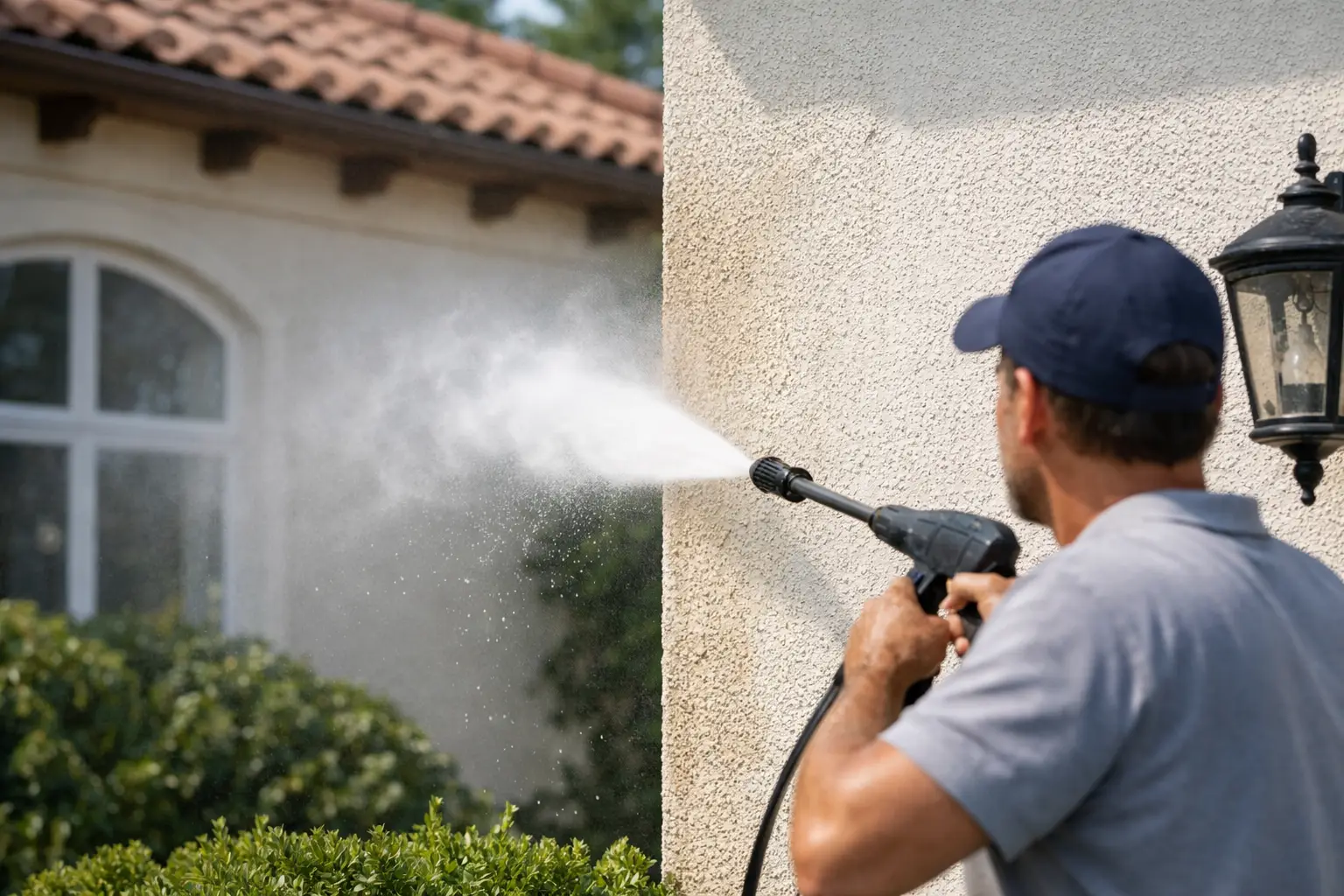
How to Wash Stucco Exterior Safely
Stucco can make a home look sharp one season and tired the next. Dust, sprinkler overspray, algae, mildew, and traffic grime tend to cling to its textured surface, especially in sunny, dry areas like Greater Los Angeles where buildup collects slowly and then all at once. If you are wondering how to wash stucco exterior surfaces without causing damage, the method matters just as much as the cleaning solution.
Stucco is durable, but it is not a surface you want to blast with high pressure just because it looks tough. The wrong approach can leave etching, force water behind cracks, or strip away paint. The right approach removes buildup, brightens the finish, and helps protect the exterior instead of shortening its life.
Why stucco needs a different cleaning method
Unlike smooth siding, stucco has pores and texture. That texture is great for appearance, but it also traps dirt, cobwebs, pollen, and organic growth. On painted stucco, oxidation and fading can make the surface look chalky. On older stucco, hairline cracks may already be present, which means aggressive washing becomes even riskier.
That is why soft washing is usually the safer choice. Instead of relying on brute force, it uses low pressure and the right cleaning agents to break down grime and organic growth before rinsing. You still get a noticeable improvement, but with far less risk to the surface.
How to wash stucco exterior surfaces the right way
Before any water goes on the wall, start with a basic inspection. Look for cracks, failing caulk around windows, loose patches, damaged paint, and areas where stucco feels brittle or hollow. If water gets behind damaged sections, a cleaning job can turn into a repair issue.
Close windows and doors tightly, cover electrical fixtures if needed, and pre-wet nearby plants. Pre-rinsing landscaping helps reduce the chance of cleaning solution drying onto leaves. If you have delicate plants directly below heavy staining, covering them during application is a smart move.
Next comes dust and dry debris. A soft brush or light rinse can remove loose dirt, spider webs, and surface-level buildup. This step matters because it keeps you from grinding debris deeper into the texture during washing.
For most homes, a stucco-safe house wash detergent or mildew-removing solution works better than plain water alone. The cleaner should be applied evenly from the bottom up to help reduce streaking. Let it dwell long enough to loosen grime, but do not let it dry on the surface. That dwell time is where much of the cleaning happens.
After that, rinse gently with low pressure. The goal is to flush away contamination, not carve into the finish. Keep the nozzle moving, maintain distance from the wall, and work in manageable sections. If one area is heavily stained, it may need a second treatment rather than more pressure.
What pressure is safe for stucco?
This is where a lot of DIY jobs go sideways. Homeowners often rent a pressure washer and assume the lowest spray tip is enough to stay safe. Sometimes it is, sometimes it is not. The actual risk depends on the PSI, the gallons per minute, the nozzle angle, the distance to the wall, and the condition of the stucco itself.
In general, stucco should be cleaned with low pressure, not high-impact blasting. Soft washing equipment is designed for that. Even if a pressure washer is used for rinsing, the operator should treat stucco like a delicate finish, not like concrete. A stronger stream might remove stains faster in the moment, but it can also leave visible marks or push water into places it should not go.
Older homes need even more caution. If the stucco has existing cracks, patched areas, or paint failure, gentle washing is the safer call every time.
Common stucco stains and how they come off
Not every discoloration on stucco is the same, so results depend on what caused it. Dust and general surface dirt usually come off well with a standard soft wash. Mildew, algae, and green or black staining respond better when the cleaning solution is given enough dwell time.
Rust is different. Rust stains from sprinkler systems, metal fixtures, or runoff can be stubborn and may need a specialty treatment. The same goes for efflorescence, which appears as a white, powdery residue from mineral salts moving through masonry. That is not just dirt on top of the wall. It often points to moisture movement within the material, so cleaning alone may not fully solve it.
Painted stucco also has limits. If a wall looks faded because the paint is oxidized or failing, washing will improve cleanliness but will not restore fresh color. Good cleaning can reveal the true condition of the finish, which is useful, but it is not a substitute for repainting.
When DIY makes sense and when it does not
A light maintenance wash on newer, intact stucco can be a reasonable DIY project if you have the right tools and know how to control pressure. If the home is one story, the staining is mild, and the surface has no visible damage, a careful soft wash process can work.
But there are cases where calling a professional is the better move. Multi-story homes, oxidation, heavy mildew, rust staining, fragile paint, or older stucco all raise the stakes. So does any property where appearance really matters, like a storefront, HOA-managed building, or a home going on the market.
The difference is not just equipment. It is knowing how to read the surface, match the cleaning method to the material, and get premium results without creating a repair bill. That is especially important on stucco because damage is not always obvious until the wall dries.
Best practices for long-lasting results
Once the surface is clean, a few maintenance habits can keep stucco looking better longer. Sprinklers should be adjusted so they do not constantly hit the walls. Gutters and downspouts should direct water away from the exterior. Trees and shrubs should be trimmed back enough to reduce shade, moisture retention, and contact marks.
It also helps to wash stucco before buildup gets severe. Waiting until stains are dark and deeply embedded usually means more labor, more solution, and less predictable results. A regular maintenance schedule is easier on the surface and better for curb appeal.
For commercial properties and managed buildings, consistent cleaning also sends a message. Clean exteriors look maintained, professional, and cared for. That matters for tenants, customers, and visitors before they ever step inside.
How often should you wash stucco exterior walls?
There is no perfect universal schedule because location and exposure play a big role. Homes near busy roads collect more grime. Shady areas stay damp longer and grow more mildew. Properties with heavy irrigation often show staining faster.
A good rule of thumb is to inspect stucco annually and wash it as needed, often every one to three years. Some homes can go longer with minimal visible buildup. Others need more frequent care to stay ahead of algae, dust, and hard water staining. The smart move is to clean based on condition, not just the calendar.
A cleaner finish starts with the right method
If you have been looking up how to wash stucco exterior walls, the main takeaway is simple: less pressure, more care, and the right cleaning solution. Stucco responds well to a controlled, surface-specific approach. It does not respond well to shortcuts.
For homeowners and property managers who want the job done safely, professionally, and without the guesswork, working with an experienced exterior cleaning company can save time and protect the finish. Whales Pressure Washing helps property owners get trusted, high-visibility results with methods built around the surface, not a one-size-fits-all spray wand. A clean stucco exterior should look better when the job is done, not just wetter.
