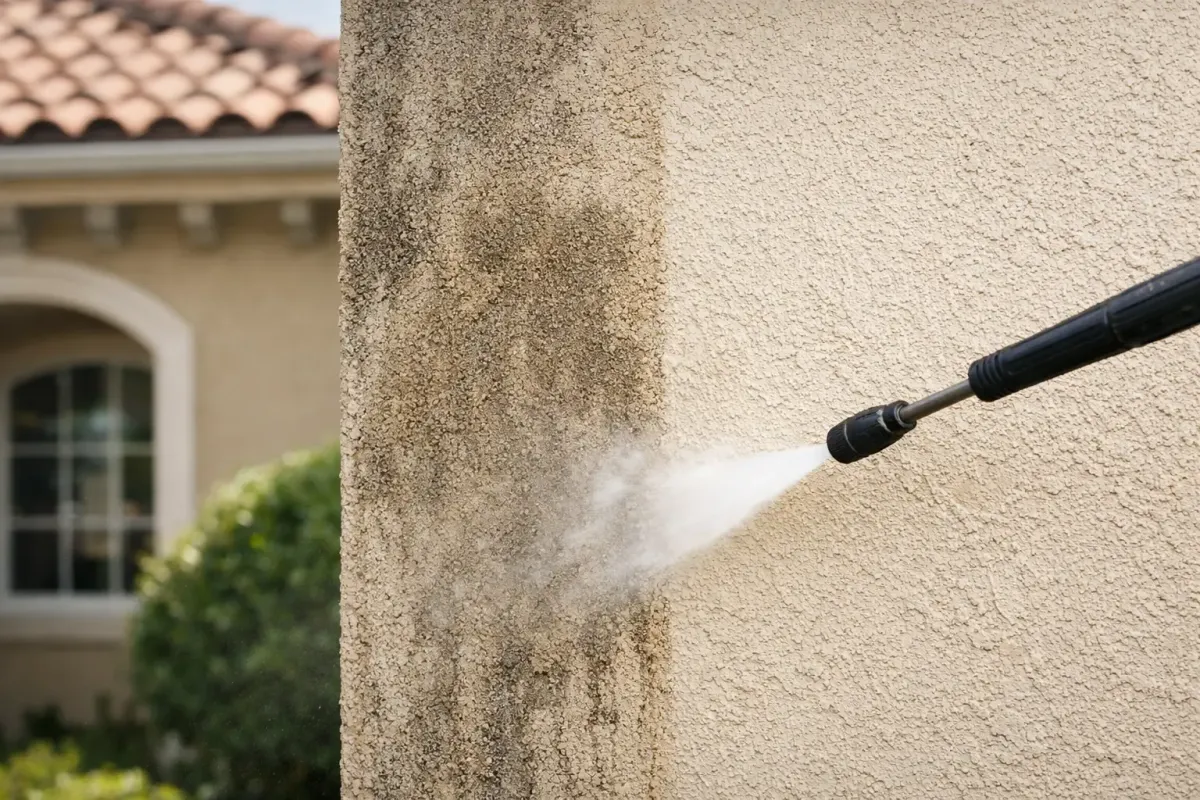
Is Pressure Washing Safe for Stucco?
Stucco can make a home look sharp, clean, and high-end - right up until dirt, mildew, and runoff stains start showing up on the walls. At that point, a lot of property owners ask the same thing: is pressure washing safe for stucco? The honest answer is yes, sometimes - but only when the surface is in good shape and the cleaning method matches the material.
That distinction matters more than most people realize. Stucco is durable, but it is not invincible. Use too much pressure, spray too close, or hit an already weak area, and what should have been a routine exterior cleaning can turn into chips, cracks, water intrusion, or ugly patchy damage.
Is pressure washing safe for stucco or not?
In some cases, pressure washing stucco is safe. In many others,soft washing is the better choice.
Stucco is a cement-based exterior finish, but it is still porous and can be surprisingly vulnerable at the surface. Older stucco, painted stucco, patched stucco, and synthetic stucco systems can all react differently to water pressure. That is why there is no one-size-fits-all answer.
If the stucco is structurally sound, fully cured, and free of cracks or loose areas, a trained technician may be able to clean it using very controlled pressure. But when the surface is aged, brittle, delaminating, or showing signs of moisture problems, high-pressure washing can make things worse fast.
For most residential stucco cleaning jobs, the safest route is a low-pressure soft wash with the right cleaning solution. That approach removes organic growth, dirt, and staining without blasting the finish.
Why stucco gets damaged so easily with the wrong method
A lot of homeowners hear "pressure washing" and picture a faster, stronger clean. On concrete or certain hardscape surfaces, that can be true. On stucco, stronger is not always better.
Stucco has texture, pores, and often small imperfections that are easy to overlook from the ground. High-pressure water can force moisture into hairline cracks, strip paint, knock off loose finish, and etch softer areas. Even if the wall looks fine immediately after cleaning, trapped water can create problems later.
This is especially relevant in older homes around Greater Los Angeles, where sun exposure, minor settling, and years of weathering can leave stucco more fragile than it appears. A wall that looks solid from ten feet away may already have weak spots around windows, trim lines, and previous repairs.
When pressure washing stucco may be safe
There are situations where carefully managed pressure washing can work. The key is restraint, not force.
If the stucco is newer, well-adhered, and in excellent condition, low-pressure rinsing may be appropriate as part of a broader cleaning process. In that case, the water pressure is kept under tight control, the spray angle matters, and the operator avoids concentrating water on one area for too long.
Even then, the goal is not to "cut through" stains with pressure alone. Professionals typically rely on cleaning agents to do the heavy lifting, then use a gentle rinse to remove buildup. That reduces the chance of surface damage and gives a more even result.
This is where experience makes a real difference. Someone who understands surface-specific cleaning knows that stucco should never be treated like a driveway, block wall, or concrete pad.
Signs the stucco may be safe to clean with low pressure
A visual inspection tells you a lot. If the finish is intact, there are no visible cracks, no bulging sections, no chalking paint, and no signs of water intrusion, the surface may tolerate a low-pressure cleaning approach.
Even then, testing a small area first is smart. A controlled test spot can show whether the surface holds up well, whether paint is lifting, and whether the staining actually responds better to soft washing than pressure.
When pressure washing stucco is not safe
If the stucco has cracks, gaps around penetrations, loose finish, or soft spots, pressure washing becomes risky. Water can be driven behind the surface, where it does not belong. That can lead to hidden moisture damage, mold issues, bubbling paint, and repairs that cost much more than the cleaning itself.
Painted stucco also deserves extra caution. Pressure that is too high can peel or scar the painted finish, leaving obvious streaks or bare spots. Synthetic stucco, often called EIFS, is another major red flag because it is much more sensitive to moisture intrusion and surface damage than traditional stucco.
If you are not sure what type of stucco you have, that is exactly why aggressive cleaning is a bad gamble. Identifying the material and its condition should always come before choosing the method.
Soft washing is usually the safer solution
For most homes and buildings, soft washing is the answer that makes the most sense. It uses specialized cleaning solutions and low-pressure application to break down algae, mildew, dirt, and staining at the source, followed by a gentle rinse.
That matters because a lot of what builds up on stucco is organic. Mildew, algae, and airborne grime do not need to be blasted off with high force. They need to be treated properly so the surface gets clean without unnecessary wear.
Soft washing also tends to deliver a more consistent finish on textured walls. Instead of leaving wand marks or uneven streaks, it cleans the surface more evenly and lowers the odds of visible damage.
For homeowners who care about curb appeal and long-term maintenance, that is usually the better trade-off. You want the wall to look better after cleaning, not freshly scarred.
What a professional looks at before cleaning stucco
A dependable exterior cleaning company should not walk up to a stucco wall and start spraying. There should be a basic assessment first.
Condition is the first concern. Cracks, patched sections, peeling paint, rust stains, and signs of previous water entry all affect how the surface should be handled. The age of the coating matters too, especially if the home has been repainted or repaired over time.
The type of staining matters just as much. Dust and surface grime are different from algae, efflorescence, sprinkler staining, or oxidation. Some stains respond well to a soft wash. Others need a more specialized treatment. Using pressure as the default fix is how damage happens.
Access and surrounding materials also come into play. Windows, doors, light fixtures, landscaping, and nearby painted trim all need to be protected during the cleaning process. A careful crew plans for that before the first spray hits the wall.
Common mistakes homeowners make
The biggest mistake is renting a pressure washer and assuming a wider spray tip makes it safe. Even consumer-grade machines can damage stucco if the pressure is too high or the nozzle is held too close.
Another common problem is trying to remove stains with pressure alone. If mildew or algae is causing discoloration, blasting the wall may remove some of the visible buildup while leaving the root of the problem behind. That means the staining can come back sooner, and the wall may now have damage on top of it.
There is also the issue of chasing a "like-new" result on a surface that may already have age-related wear. Exterior cleaning can dramatically improve appearance, but it cannot reverse every flaw in aging stucco. A good contractor will be clear about what is cleanable, what is permanent, and what may need repair instead of washing.
So what should property owners do?
Start with the condition of the stucco, not the machine. If the surface is in great shape, low-pressure washing may be possible in the right hands. If there is any doubt, soft washing is generally the safer and smarter option.
For homes, apartment buildings, retail storefronts, and managed properties, the priority should be clean results without creating repair work. That means choosing a company that understands stucco, uses surface-appropriate methods, and is willing to explain why one approach is safer than another.
At Whales Pressure Washing, that is the standard. The goal is not just to clean fast. It is to clean the right way, protect the surface, and give customers the kind of result they can feel confident about.
If your stucco exterior is showing dirt, mildew, or staining, the best next step is a proper inspection and a clear recommendation based on the wall in front of you - not a one-method-fits-all guess. A clean building should look better when the job is done, and it should still be in great shape long after the water dries.
