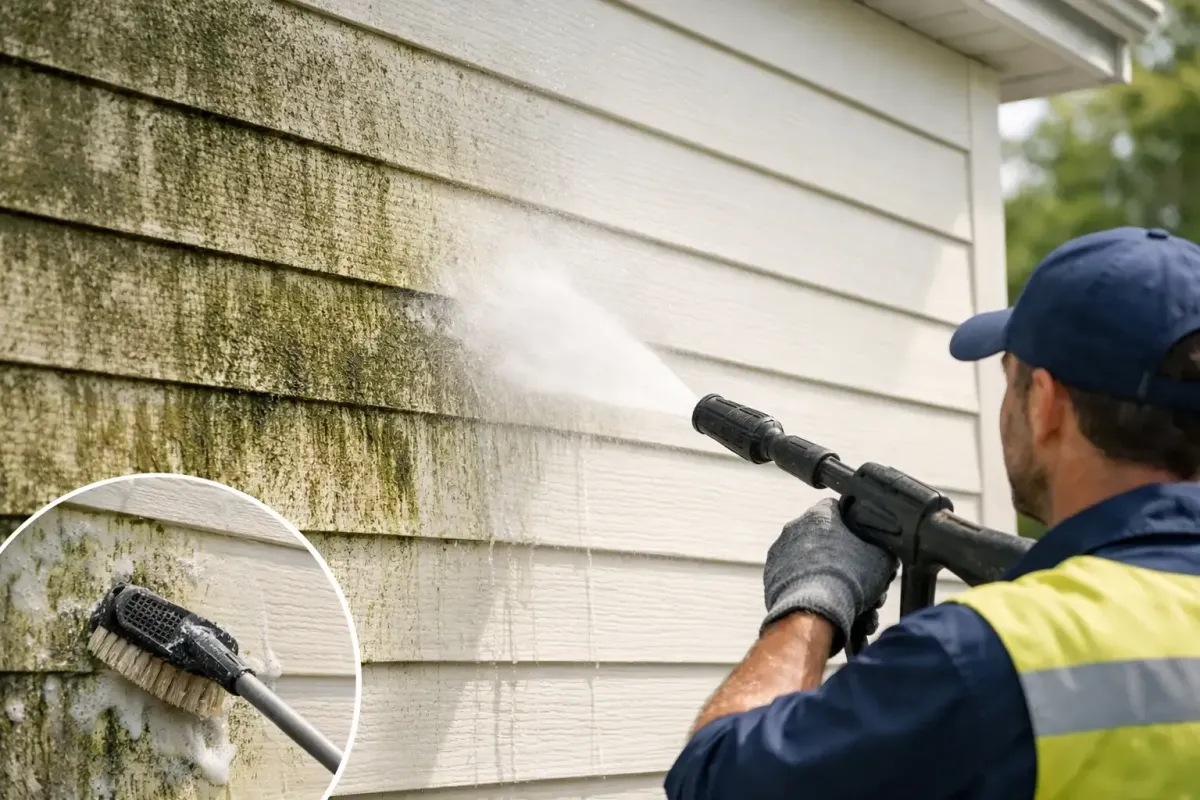
Mold and Mildew House Siding Cleaning
That green haze on the shaded side of the house is not just an eyesore. It is the kind of buildup that makes a well-kept property look neglected fast, especially in neighborhoods where curb appeal matters. Mold and mildew house siding cleaning is one of the simplest ways to freshen the look of a home, protect exterior materials, and avoid the bigger mess that comes from letting growth sit too long.
In the Greater Los Angeles Area, siding picks up more than dust. Coastal moisture, marine layer conditions, sprinkler overspray, tree shade, and trapped debris all create the right conditions for organic growth. Homeowners often notice dark streaks, green patches, or chalky-looking discoloration and assume they just need a stronger blast of water. In many cases, that is exactly what causes the damage.
Why mold and mildew show up on house siding
Mold and mildew thrive where moisture lingers. That can happen on the north side of a house, under eaves, behind landscaping, or anywhere airflow is limited. Even in a warm climate, morning dew, fog, humidity, and irrigation can keep siding damp long enough for spores to grow.
Not every stain is the same, and that matters when you are deciding how to clean it. Mildew usually appears as gray, white, or black surface growth. Mold can show up darker and spread more aggressively in damp areas. Algae often looks green and slick. Dirt, oxidation, and hard water can also make siding look stained, but they do not respond to cleaning the same way.
That is why surface-specific treatment matters. If you attack every stain with high pressure, you may remove some of the visible growth while forcing water behind panels, stripping paint, or scarring softer materials.
Mold and mildew house siding cleaning is not just cosmetic
A clean exterior absolutely improves appearance, but the benefit goes further than that. Organic growth holds moisture against the surface. Over time, that can shorten the life of paint, contribute to deterioration around seams and trim, and leave siding looking aged before its time.
For homeowners preparing to sell, rent, or host guests, siding stains can drag down the entire first impression of the property. For commercial buildings and managed properties, it sends a message that maintenance is slipping. A professional cleaning helps restore a cleaner, brighter look without the cost of repainting or premature replacement.
There is also a practical maintenance angle. When siding is cleaned regularly, it is easier to spot cracked caulking, damaged trim, insect activity, and drainage issues before they become expensive repairs.
The safest way to clean mold and mildew off siding
The right method depends on the siding material, the severity of buildup, and the condition of the home’s exterior. Vinyl, painted wood, fiber cement, stucco, and engineered siding all respond differently to water pressure and cleaning solutions.
For most homes, soft washing is the safer approach. Instead of relying on brute force, soft washing uses low pressure and cleaning solutions designed to break down mold, mildew, algae, and grime at the source. This allows the surface to be treated and rinsed without the risk that comes from aggressive pressure washing.
High pressure has its place on harder surfaces like concrete, but house siding usually calls for more control. Too much force can crack panels, strip paint, drive water behind siding, and leave visible marks. The goal is not to win a battle with the wall. The goal is to remove contamination safely and leave the exterior looking clean and even.
What homeowners should avoid
A lot of siding damage starts with good intentions. Renting a pressure washer for the weekend sounds simple until the nozzle gets too close, the pressure is too high, or the wrong cleaner gets used. Then a cleaning project turns into warped siding, broken seals, dead landscaping, or uneven results.
Bleach-heavy mixtures are another common mistake. They may lighten surface stains quickly, but they are not always the best fit for every material, and improper use can affect nearby plants and painted finishes. The better approach is a measured process that matches the cleaner and water pressure to the surface.
Timing matters too. Cleaning in direct heat can cause solutions to dry too quickly, which reduces effectiveness and can leave streaking behind. On the other hand, waiting until growth becomes heavy makes the job harder and can require more treatment.
How professional house siding cleaning works
A quality service starts with an inspection, not a spray wand. The cleaner should identify the siding type, note problem areas, check for existing damage, and choose the proper method before any work begins. This is especially important on older homes or properties with mixed exterior materials.
From there, surrounding plants and sensitive areas should be protected. The siding is treated with the right cleaning solution to break down mold, mildew, and surface contamination. After dwell time, the exterior is rinsed carefully at low pressure to remove buildup without harming the surface.
Good results are not just about making the house look brighter for one day. They come from actually treating the organic growth so it is removed more completely and less likely to rebound immediately. That is the difference between a rushed rinse and a professional cleaning.
For local homeowners who want premium results without guesswork, companies like Whales Pressure Washing focus on this kind of surface-specific approach. It is the safer route for protecting curb appeal and the siding itself.
When to schedule mold and mildew house siding cleaning
There is no single schedule that fits every property. A house under dense trees with frequent sprinkler mist may need cleaning more often than one with full sun and better airflow. Homes near the coast or in shaded foothill areas may also see faster buildup.
For many properties, annual or every-other-year cleaning keeps the exterior in strong shape. If you already see green patches, black spotting, or dingy streaking from the street, it is time. If you are planning exterior painting, listing the home, hosting an event, or just trying to get the property back to a well-maintained standard, cleaning first makes a noticeable difference.
Commercial properties and managed buildings often benefit from a more regular schedule because appearances affect tenants, customers, and foot traffic. A clean building exterior helps reinforce that the property is cared for.
Why local experience matters in Los Angeles area neighborhoods
Exterior cleaning is never one-size-fits-all, and local conditions change the job. In Pasadena, Glendale, Arcadia, Burbank, San Marino, and surrounding areas, homes vary widely in age, siding material, lot layout, and shade exposure. Some collect dust and grime from traffic. Others stay damp from irrigation or dense landscaping.
A contractor familiar with these conditions is better positioned to clean effectively without overdoing it. That means understanding when soft washing is the right call, how to work around delicate finishes, and how to deliver visible results without causing property damage. Customers are not just paying for clean siding. They are paying for confidence that the job is handled correctly.
Licensed and insured service matters here too. When someone is working around windows, trim, paint, landscaping, and exterior fixtures, professionalism is not optional. Clear communication, fast quoting, and a straightforward process make the whole project easier from start to finish.
Clean siding makes the whole property look cared for
Fresh siding changes more than the wall itself. It lifts the look of trim, windows, gutters, driveways, and landscaping because the whole exterior reads as cleaner. That is why siding cleaning often delivers one of the most noticeable visual improvements for the money.
It also helps owners stay ahead of maintenance instead of reacting to it. A house that is cleaned regularly tends to be easier to maintain, easier to show, and easier to feel good about every time you pull into the driveway.
If your siding is showing green, gray, or black buildup, waiting rarely improves the situation. The smart move is to treat it early, use the right method for the material, and get the job done in a way that protects both the finish and the value of the property.
