Oil Stain Removal Driveway: What Works
That dark spot in the driveway never stays small for long. A minor leak from one car can turn clean concrete into a greasy eyesore, and once the oil soaks in, basic rinsing usually does nothing. If you are dealing with oil stain removal driveway problems, the right approach depends on how old the stain is, what surface you have, and how deep the oil has penetrated.
In Greater Los Angeles, driveways take a beating from heat, traffic, and long dry stretches that let stains bake into the surface. That matters because hot concrete can pull oil deeper into the pores, especially on standard broom-finished concrete and older pavers. The result is a stain that looks permanent even when it is not.
Why oil stains are so hard to remove
Oil does not just sit on top of a driveway. Concrete, brick, and many pavers are porous, which means the stain can wick below the surface quickly. Once that happens, you are not simply washing away a spill. You are trying to break down oil that has settled into tiny voids and bonded with dirt, tire residue, and surface grime.
Fresh stains are much easier. If the spill happened today or within the last day or two, you have a real chance to absorb a lot of the contamination before it sinks deeper. Older stains are different. They usually need a cleaner that can draw out or break down the oil, followed by surface cleaning strong enough to lift the residue without damaging the material.
That is where many property owners get frustrated. They try dish soap, a garden hose, and a scrub brush, then assume the stain is permanent when it barely fades. Sometimes the cleaner is too mild. Sometimes the stain needs multiple treatments. And sometimes aggressive cleaning causes etching or discoloration that looks worse than the original spot.
Oil stain removal driveway methods that actually help
The best method starts with one simple question: is the stain fresh or set in?
For fresh oil stains
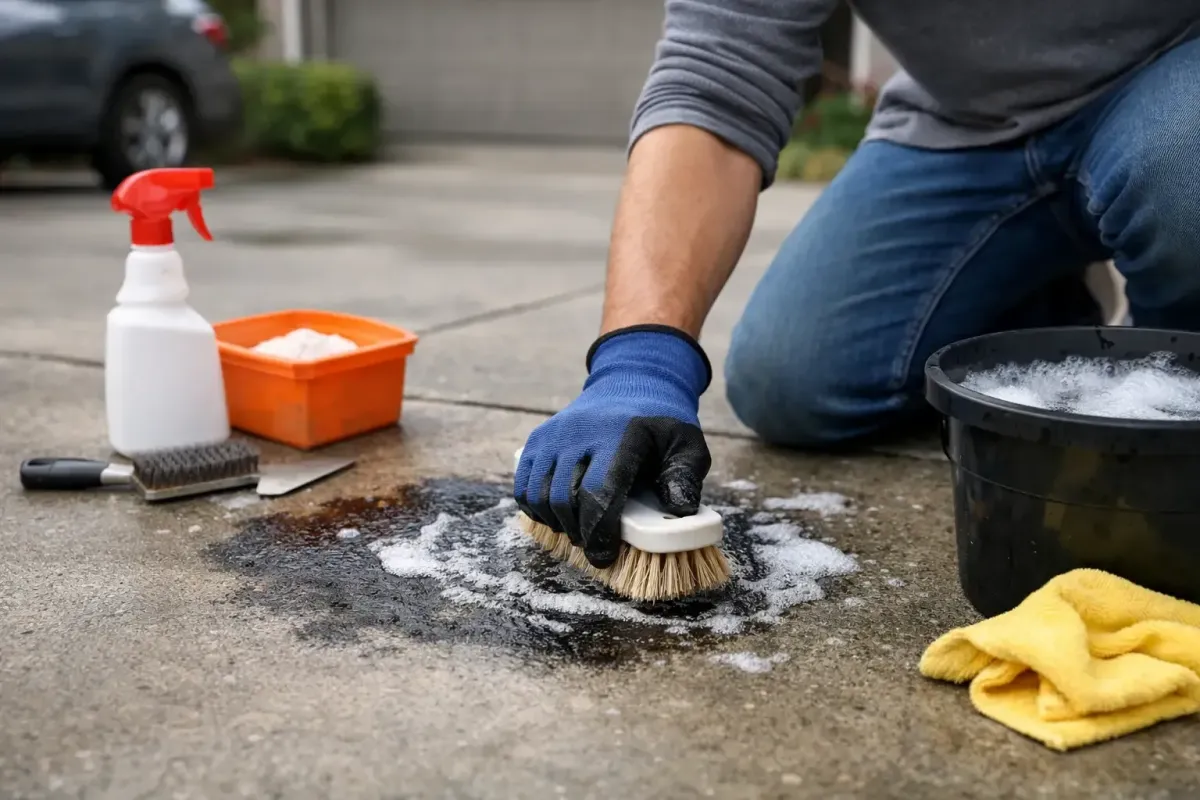
If the spill is recent, your first job is absorption. Cat litter, baking soda, or another absorbent material can help pull surface oil up before it penetrates further. Let it sit, grind it lightly under your shoe if appropriate, and sweep it away. After that, apply a degreaser made for concrete and scrub the area with a stiff brush.
Warm water helps, but pressure alone is usually not enough. Oil and water do not mix well, and blasting a fresh stain without the right cleaner often just spreads residue outward. The goal is to loosen and lift, not force the oil deeper into the surface texture.
For older or darker stains
Set-in stains usually need a stronger degreasing treatment. A professional-grade oil remover or poultice-style cleaner can be effective because it does more than clean the top layer. It works to draw embedded oil upward as it dries. These products often outperform general household cleaners, especially on old garage apron stains or repeated drip spots under parked vehicles.
The trade-off is time. Stronger treatment products may need to sit for a while, and some stubborn stains require more than one application. If the stain has been there for months, full removal is not always realistic in one pass. Improvement is common. Total disappearance depends on the age of the stain, the porosity of the surface, and whether previous DIY attempts sealed the oil in.
For pavers and decorative surfaces
Not every driveway should be treated the same way. Concrete can usually handle more aggressive scrubbing and cleaning than coated surfaces, decorative finishes, or certain pavers. On interlocking pavers, oil can move into the joints and bedding material, which makes cleanup more complicated. On sealed driveways, the stain may sit closer to the surface, but using the wrong cleaner can strip or dull the sealer.
This is why surface-specific cleaning matters. A method that improves plain gray concrete may damage colored pavers or leave inconsistent results across stamped concrete. If you are unsure what surface you have, it is smart to slow down before using heavy-duty chemicals or high pressure.
What not to do when removing oil from a driveway
A lot of driveway damage happens during well-intended cleanup.
One common mistake is using too much pressure too quickly. Pressure washing has a place in oil stain treatment, but pressure by itself is not a cure. On concrete, overdoing it can leave visible wand marks or etching. On softer material, it can remove joint sand, disturb the surface, or create an uneven clean spot that stands out from the rest of the driveway.
Another mistake is reaching for harsh products without checking surface compatibility. Acid-based cleaners, bleach-heavy mixes, and random garage chemicals can create discoloration or weaken surrounding areas. Some products also react badly in heat, which is a real concern in Southern California when driveway temperatures climb fast.
There is also the issue of timing. Cleaning in direct midday sun can cause degreasers to dry too fast, reducing their effectiveness and increasing the chance of residue. A cooler window, proper dwell time, and controlled rinsing often produce better results than brute force.
When pressure washing helps and when it does not
Pressure washing is often part of the solution, but rarely the whole solution for oil stain removal driveway issues. The cleaner does the chemical work. The pressure washer helps rinse away loosened residue and restore a more uniform appearance across the surface.
For a light stain caught early, that combination may be enough. For an older stain, pressure washing can improve the look significantly after degreasing, but some shadowing may remain. That does not always mean the cleaning failed. It may mean the oil altered the concrete beneath the visible surface or that deeper contamination still needs follow-up treatment.
Professional service tends to work better because it combines the right detergent, controlled pressure, and experience reading the surface. An expert can tell the difference between a stain that needs another treatment and a stain that has reached the point of realistic improvement. That saves time and helps prevent damage from repeated guesswork.
Why some stains come back after cleaning
This surprises a lot of homeowners. A driveway can look much better right after treatment, then show a faint dark spot again once the surface fully dries. In many cases, that is leftover oil wicking back up from below the top layer. It is especially common with long-term leak spots or areas where cars sit regularly.
That does not mean removal is impossible. It means the stain was deeper than it first appeared. Additional treatment may be needed, and in some cases sealing the surface after successful cleaning can help protect against future staining. Sealing is not a shortcut for active stains, though. If you seal too soon, you can trap discoloration in place.
When it makes sense to call a professional
If you have tried store-bought degreasers, scrubbing, and rinsing with little change, the next step should not automatically be more force. It should be a better process. Professional driveway cleaning is worth considering when the stain is old, the surface is decorative, or the driveway has multiple oil spots that make the whole area look neglected.
For homeowners focused on curb appeal, this is often the smart move before listing a property, hosting guests, or just getting the exterior back in shape. For property managers and commercial owners, oil spots send the wrong message fast. A clean driveway or parking area looks safer, more maintained, and more professional.
A trusted exterior cleaning company can also address the bigger picture. Sometimes the driveway does not just have oil staining. It has embedded dirt, algae, tire marks, and uneven color that make the stain stand out more. Cleaning the full surface instead of only treating one spot often delivers the best visual result.
That is the standard at Whales Pressure Washing - safe, surface-aware cleaning, clear communication, and premium results that make the property look cared for again.
How to prevent the next oil stain
The best prevention starts with the vehicle. Fixing leaks early is cheaper than repeated stain treatment. If a car or truck has an active drip, using a mat or drip pan can protect the driveway while repairs are scheduled.
Routine driveway cleaning also helps. When dirt and grime build up, oil bonds to that layer and becomes harder to remove cleanly. A well-maintained surface gives spills less time and less contamination to work with. If the driveway is a good candidate for sealing, that can add another layer of protection and make future cleanup easier.
Not every stain disappears completely, and any honest contractor should say that upfront. But many driveways can be improved dramatically with the right cleaner, the right pressure, and the right expectations. The main thing is not letting a small leak become a long-term eyesore. The faster you deal with it, the better your chances of getting your driveway back to a clean, sharp look.
