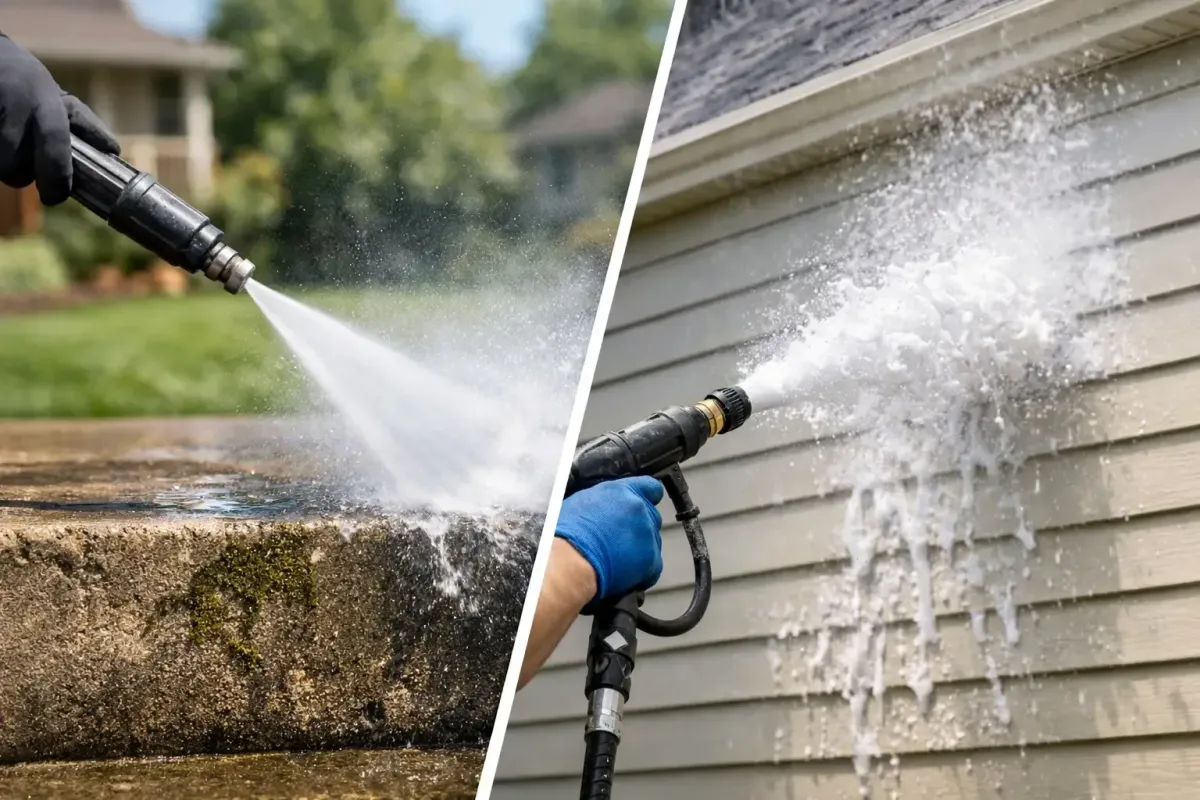
Pressure Washing vs Soft Washing Explained
A dirty driveway and a streaked roof do not need the same cleaning method. That is where pressure washing vs soft washing becomes more than a technical detail. If you choose the wrong approach, you can leave stains behind, shorten the life of a surface, or cause damage that costs far more than the cleaning itself.
For homeowners and property managers in the Greater Los Angeles Area, the goal is simple: get premium results without taking risks. The right cleaning method depends on the material, the type of buildup, and how deep the contamination goes. Some surfaces need force. Others need a gentler treatment that cleans at the source.
Pressure washing vs soft washing: what is the difference?
Pressure washing uses high-pressure water to remove dirt, grime, mud, loose paint, and surface buildup. It is a strong mechanical cleaning method that works well on durable surfaces that can handle force. Think concrete, certain stone surfaces, and heavily soiled exterior areas where grime is sitting on top.
Soft washing uses low-pressure water combined with cleaning solutions designed to break down organic growth like mold, mildew, algae, and bacteria. Instead of blasting buildup off, soft washing treats it so it can be rinsed away safely. This makes it a better choice for more delicate exterior materials.
That difference matters. Pressure washing is about force. Soft washing is about chemistry and control. Both are effective when used in the right place. Both can be a bad idea when used in the wrong place.
When pressure washing is the right choice
Pressure washing is best for hard, durable surfaces that can handle a stronger stream of water. In many cases, it is the fastest way to restore a clean, bright look and improve curb appeal.
Driveways are a common example. Oil residue, tire marks, dirt, and years of foot traffic can settle deep into concrete. A proper pressure wash can cut through that buildup and reveal a dramatic difference. Sidewalks, patios, retaining walls, parking areas, and some commercial walkways also respond well to this method.
Pressure washing can also be useful before painting or sealing certain surfaces because it clears away loose debris and creates a cleaner base. But even on tough materials, pressure must be controlled. Too much pressure, held too close, can leave visible lines, etch concrete, or damage mortar joints.
This is why professional service matters. Strong equipment in inexperienced hands can do more harm than good, especially on older surfaces that already have wear.
When soft washing is the better option
Soft washing is the safer choice for surfaces that are more vulnerable to damage or where organic growth is the real problem. Roofs are a classic example. If you pressure wash roofing materials, especially shingles or tiles, you can dislodge granules, force water into places it should not go, and shorten the roof's lifespan.
Soft washing is also ideal for house siding, stucco, painted exterior surfaces, fences, gutters, and other materials that need cleaning without high-impact force. It is especially effective when you are dealing with green algae, black streaks, mildew, or mold. Those issues are not just sitting on the surface. They are living growths, and they need to be treated, not just pushed around.
That is one of the biggest reasons soft washing often delivers longer-lasting results on certain surfaces. It does not only remove the visible mess. It helps eliminate the source of it.
Pressure washing vs soft washing for common exterior surfaces
The easiest way to think about pressure washing vs soft washing is by matching the method to the surface.
Concrete driveways, sidewalks, and many patios usually benefit from pressure washing because they are built to handle a more aggressive clean. If there are deep stains, the process may also involve surface-specific treatment to improve results.
House siding often requires a softer approach. Vinyl, painted wood, and other exterior finishes can be damaged by excessive pressure, especially around seams, trim, and windows. In these cases, soft washing gives a cleaner result with less risk.
Roofs should almost always be handled with soft washing. Those dark stains you see are often algae-related, and high pressure is not the answer. A low-pressure treatment cleans the roof more safely and helps preserve the material.
Stucco is another surface where care matters. While some stucco areas can handle controlled rinsing, blasting it with high pressure can lead to chips, cracks, or water intrusion. Soft washing is often the safer choice.
Commercial properties usually need a mix of both. A storefront walkway may need pressure washing, while signage, painted trim, and building exteriors may be better cleaned with soft washing. That is why surface-by-surface planning matters on larger properties.
The biggest mistake: assuming stronger is always better
A lot of property owners hear the term pressure washing and assume more pressure means a better clean. That sounds logical, but it is not always true.
High pressure can remove surface dirt fast, but it is not automatically the best method for every stain or every material. If you are dealing with mold, algae, or mildew, pressure alone may clean the visible layer while leaving spores behind. That can lead to regrowth sooner than expected.
On the other hand, soft washing may look gentler, but that does not mean it is weaker. On the right surface, it is often the smarter and more effective method because it treats the actual contamination instead of just the symptom.
The best exterior cleaning companies do not force one method onto every job. They inspect the surface, identify the buildup, and choose the safest process that delivers premium results.
Why professional cleaning matters in Los Angeles area conditions
Southern California properties deal with a mix of dust, traffic film, tree debris, bird droppings, pollution, and moisture-related growth in shaded areas. Even when the weather feels dry, exterior surfaces can still develop staining and buildup over time.
That means one home may need concrete pressure washing in the front and soft washing on the roof and siding. A commercial property may need entryways cleaned for appearance, dumpster pad areas cleaned for sanitation, and exterior walls cleaned without affecting paint or finishes.
In other words, it depends. The right answer is rarely one-size-fits-all. It comes down to surface condition, material type, age, and the result you want.
That is where working with a licensed and insured professional gives customers real peace of mind. You want someone who understands how to clean aggressively where appropriate and carefully where necessary. You also want clear communication, fast quoting, and confidence that the job will be done right the first time.
How to know which service you need
If your concrete looks dull, stained, or ground-in with dirt, pressure washing may be the right fit. If your roof has black streaks, your siding has green buildup, or your painted exterior needs a safe but thorough clean, soft washing is likely the better option.
If you are not sure, that is normal. Most property owners are not expected to diagnose cleaning methods on their own. A trustworthy contractor should walk you through the recommendation, explain why a certain process is safer, and make the decision easy to understand.
That is the standard customers should expect from a company like Whales Pressure Washing. Not guesswork. Not one-method-fits-all service. Just the right cleaning method for the right surface, backed by professional care and dependable results.
When you are looking at buildup on your home or commercial property, the question is not which method sounds stronger. It is which method gets the best result without creating unnecessary risk. That is how you protect curb appeal, preserve your surfaces, and make exterior cleaning worth every dollar.
