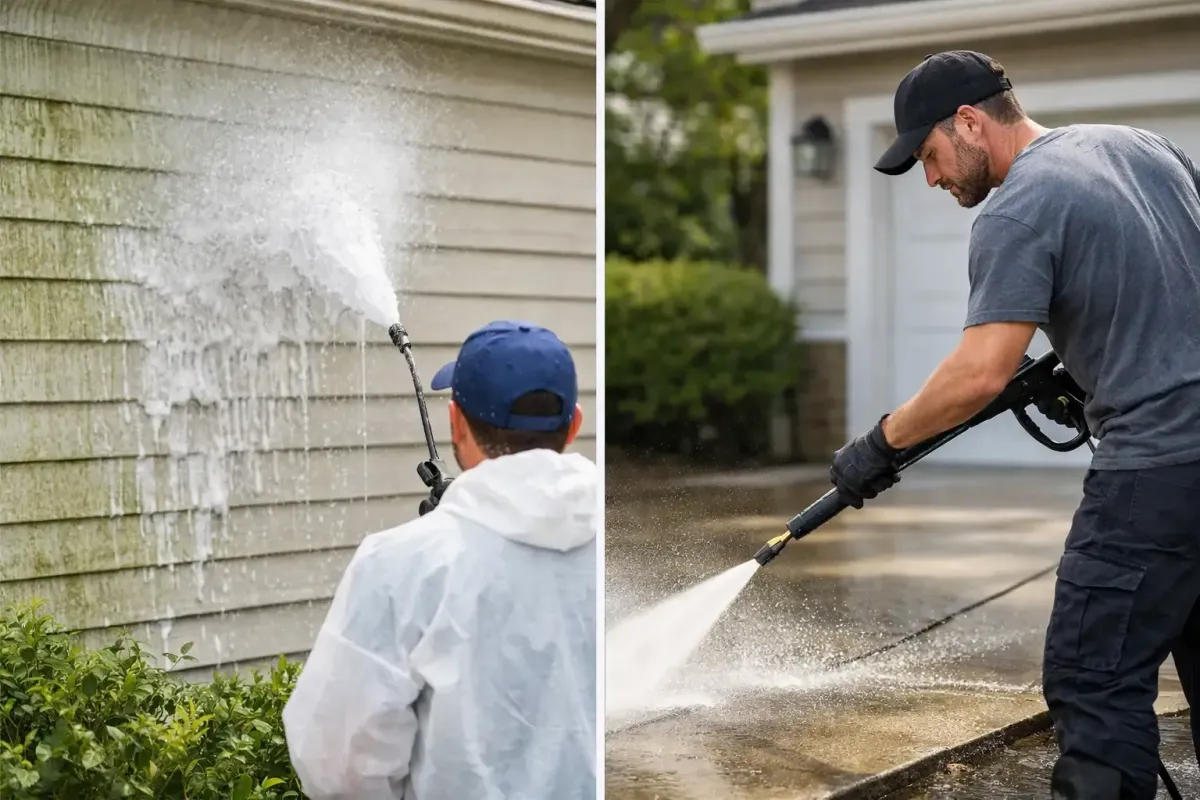
Soft Washing vs Pressure Washing Explained
A stained driveway and a black-streaked roof do not need the same cleaning method. That is where many property owners get tripped up. When comparing soft washing vs pressure washing, the right choice comes down to the surface, the type of buildup, and how to get a clean result without causing damage.
At Whales Pressure Washing, we see this all the time across homes and commercial properties in the Greater Los Angeles Area. Some surfaces need the force of high-pressure cleaning to cut through heavy grime. Others need a lower-pressure, treatment-based approach that removes algae, mold, mildew, and organic staining safely. If you use the wrong method, you can etch concrete, loosen shingles, scar wood, or force water where it should not go.
Soft washing vs pressure washing: what is the difference?
Pressure washing uses a strong stream of water to remove dirt, stains, mud, and surface buildup. It is effective on hard, durable materials that can handle force, such as concrete, stone, some pavers, and certain commercial exterior surfaces. The cleaning power comes mainly from water pressure.
Soft washing uses low pressure along with specialized cleaning solutions to break down and kill organic growth like mold, algae, mildew, and bacteria. Instead of blasting the surface clean, it treats the root of the problem and rinses it away gently. The cleaning power comes mainly from the solution and the process, not raw force.
That difference matters more than most people think. A surface can look tough and still be vulnerable. Roof shingles, painted siding, stucco, screens, fences, and older exterior materials often need a gentler method to avoid wear and tear.
When pressure washing is the better choice
Pressure washing is usually the right fit when the surface is dense, durable, and dealing with ground-in grime rather than living growth. Think driveways with oil marks, walkways with dirt buildup, parking areas, retaining walls, and other hardscape surfaces that collect years of traffic and weather exposure.
Concrete is a good example. It can handle a higher-pressure cleaning process, and it often needs it. Dirt settles into the pores, tire marks stick around, and shaded areas can become slick with surface buildup. Pressure washing can quickly restore a brighter, cleaner look and improve curb appeal at the same time.
Commercial properties often benefit from pressure washing too, especially around entryways, loading areas, dumpster pads, sidewalks, and storefront concrete. These are high-traffic surfaces where appearance matters and grime builds up fast.
That said, higher pressure is not automatically better. Too much force in the wrong hands can leave lines, strip coatings, damage mortar, or etch the surface permanently. Professional cleaning is not just about having strong equipment. It is about knowing how much pressure to use, what nozzle to use, and when to switch methods entirely.
When soft washing is the safer and smarter option
Soft washing is often the better choice when you are dealing with delicate materials or organic staining. Roofs are the clearest example. Those black streaks you see on shingles are usually not just dirt. They are often algae growth, and blasting them with high pressure can shorten the life of the roof.
A soft wash approach treats the algae and lifts the staining without tearing into the roofing material. The same logic applies to painted exterior walls, vinyl siding, stucco, wood surfaces, fencing, patio covers, and other areas where aggressive pressure can do more harm than good.
Soft washing is also a smart option when the goal is longer-lasting cleanliness. Because the cleaning solution targets mold, mildew, and algae at the source, the surface often stays cleaner longer than it would with water pressure alone. That matters in shaded areas, around landscaping, and on surfaces that stay damp or collect organic debris.
For homeowners in areas like Pasadena, Glendale, Arcadia, and Burbank, this is especially useful on exterior surfaces that face uneven sun exposure. One side of a property may stay relatively clean, while another side develops streaking, green growth, or dark staining much faster.
Soft washing vs pressure washing for common surfaces
If you are deciding between soft washing vs pressure washing, it helps to think surface by surface instead of trying to pick one method for the whole property.
For roofs, soft washing is typically the right answer. Asphalt shingles, tile roofs, and many roof surfaces should be cleaned with a low-pressure method that removes algae and staining safely.
For house siding, it depends on the material and condition. Vinyl, painted surfaces, and older exteriors are often better candidates for soft washing. Some more durable surfaces may allow for controlled pressure, but careful evaluation matters.
For driveways and sidewalks, pressure washing is usually the stronger choice. Concrete and other hard flatwork respond well to higher pressure when handled correctly.
For wood decks and fences, the answer depends on age, finish, and condition. Wood can be damaged easily, so many surfaces need a gentle approach, lower pressure, or a combination of cleaning methods.
For stucco, soft washing is often safer. Stucco can hold dirt and organic growth, but it can also be damaged by improper pressure.
For commercial storefronts, walkways, and building exteriors, a mixed approach is common. One area may need pressure washing for hard surfaces, while another needs soft washing for painted walls, signage areas, or delicate exterior finishes.
Why the wrong method causes expensive problems
This is where experience really matters. DIY cleaning often starts with a rented pressure washer and good intentions. Then the lines show up on the driveway, paint gets stripped, water gets behind siding, or roof granules start coming loose.
The risk is not just cosmetic. Incorrect cleaning can shorten the life of materials, create moisture issues, and lead to repairs that cost far more than professional service would have. Surface cleaning should improve the condition of your property, not create a new maintenance problem.
That is why a trustworthy contractor looks at more than the stain. They evaluate the material, age, finish, level of buildup, and surrounding conditions before choosing a process. Safe results are not accidental.
Which method gets better results?
It depends on what you mean by better. If you need to remove heavy soil, mud, surface grime, and traffic marks from hardscape, pressure washing often delivers the fastest visual transformation. It is strong, efficient, and ideal for many exterior flat surfaces.
If you need to remove algae, mildew, mold, and staining from more sensitive materials, soft washing often produces the better result because it cleans without unnecessary force. It also tends to address the source of organic growth instead of only removing what is visible on the surface.
In many cases, the best result comes from using both methods in the right places. A full exterior cleaning project might involve soft washing the house and roof while pressure washing the driveway, walkways, and concrete patio. That kind of surface-specific plan gives you a cleaner property without gambling on damage.
What property owners in Los Angeles should keep in mind
The Greater Los Angeles Area brings a mix of dust, traffic residue, heat, shade, irrigation overspray, and organic buildup. Different neighborhoods and property types show wear in different ways. A hillside home with shaded walls may deal with algae and mildew, while a high-traffic commercial property may need regular concrete cleaning to stay presentable.
That is why there is no one-size-fits-all answer. The best cleaning method depends on your surfaces, your goals, and how long the buildup has been sitting there. A reliable contractor should be able to explain the plan clearly, quote the work quickly, and clean each area with the method that protects your investment.
If you are looking at dirty siding, stained concrete, or a roof that has lost its clean appearance, the smartest next step is not guessing. It is getting a professional assessment from a licensed and insured team that knows when to use pressure, when to use a soft wash process, and how to deliver premium results without unnecessary risk.
A clean exterior should feel like progress, not a gamble, and the right method makes all the difference.
